
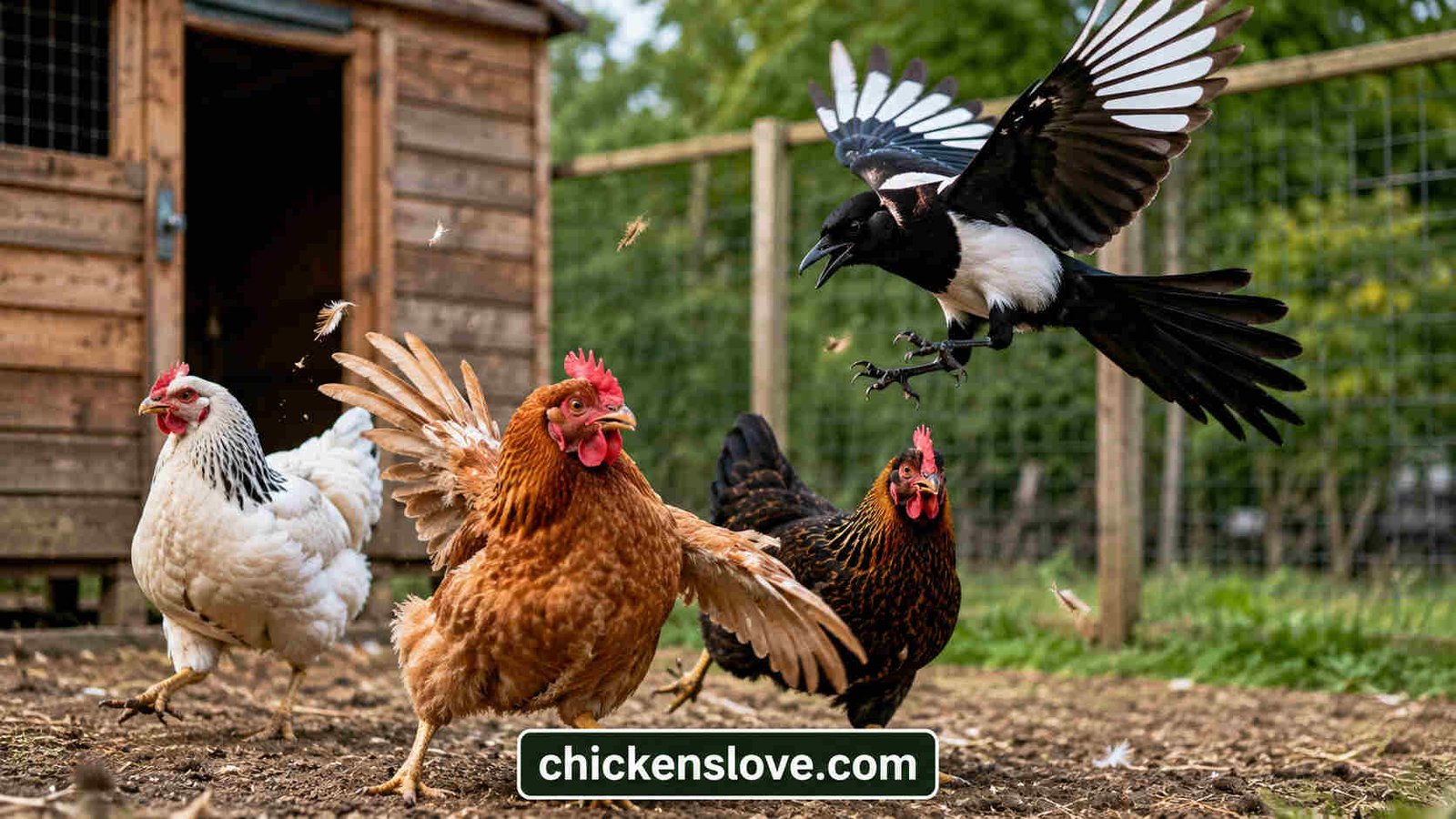
If you keep backyard poultry, you may have wondered: do magpies attack chickens? The answer is yes, but not in every situation. Magpies are intelligent and opportunistic birds that can sometimes harass, peck, or even injure vulnerable chickens, especially chicks. However, healthy adult chickens are usually capable of defending themselves against occasional magpie interference.
Understanding why magpies interact with chickens and how to protect your flock can help prevent injuries, stress, and losses. This guide explains the real risks, common behaviors, and practical solutions for keeping your chickens safe.
Understanding the Relationship Between Magpies and Chickens
Magpies are known for their intelligence, curiosity, and territorial behavior. While they are not natural predators of large adult chickens, they often investigate chicken coops and runs in search of food, nesting materials, or easy opportunities.
Many poultry owners ask, Will magpies attack chickens? In reality, magpies are more likely to target vulnerable birds rather than healthy mature hens. Chicks, injured chickens, and birds that are isolated from the flock face the greatest risk.
Before looking at specific attack scenarios, it is important to understand what attracts magpies to chicken areas in the first place.
Why Are Magpies Interested in Chicken Coops?
Magpies are opportunistic feeders. They are attracted to locations where food is readily available and competition is low.
Common attractions include:
- Chicken feed left exposed
- Food scraps around the coop
- Eggs that are easy to access
- Small chicks
- Insects and grubs near the chicken run
Providing proper nutrition to your flock can also reduce food-related competition. Many poultry keepers supplement diets with treats such as can chickens eat celery to keep birds active and healthy while maintaining balanced feeding routines.
Once magpies become interested in a coop area, their behavior can range from harmless observation to more aggressive interactions.
Do Magpies Actually Attack Chickens?
The short answer is yes, but the severity depends on the circumstances.
Magpies generally avoid direct confrontations with healthy adult chickens. However, they may peck at chickens when attempting to steal food or establish dominance over a particular area. During breeding season, territorial instincts can make magpies more aggressive.
Situations When Magpies May Attack Chickens
| Situation | Risk Level | Explanation |
|---|---|---|
| Newly hatched chicks | High | Chicks are small and vulnerable. |
| Injured chickens | High | Weak birds are easier targets. |
| Chickens eating alone | Medium | Isolated birds face greater risk. |
| Healthy adult hens | Low | Most can defend themselves. |
| Roosters present | Very Low | Roosters often deter magpies. |
Although attacks on adult chickens are uncommon, repeated harassment can create stress within the flock. Stress often reduces egg production and may affect overall health.
Understanding why these attacks happen helps poultry keepers take effective preventive measures.
Why Do Magpies Swoop My Chickens?
One of the most common concerns among poultry owners is: Why do magpies swoop my chickens?
Swooping behavior is usually linked to territorial protection rather than predation. During nesting season, magpies become highly defensive and may perceive chickens as potential threats.
Several factors can trigger swooping:
- Nesting sites near the chicken run
- Competition for food sources
- Protection of young magpie chicks
- General territorial behavior
In many cases, swooping is intended to scare rather than injure. Nevertheless, repeated swooping can stress chickens and disrupt normal feeding and foraging patterns.
As we move forward, it is useful to identify which birds within the flock are most vulnerable.
Are Baby Chicks More at Risk?
Yes. Chicks face significantly greater danger than adult chickens.
Because they are small and less capable of defending themselves, chicks may be viewed as potential prey by magpies. Free-ranging chicks without supervision are particularly vulnerable.
Protective measures include:
- Keeping chicks in covered brooders
- Using enclosed runs
- Supervising outdoor time
- Providing hiding areas
A healthy diet also contributes to stronger chick development. Many owners explore safe treats and supplements, including can chickens eat mushrooms as part of a varied feeding program.
When chicks are protected properly, the risk of serious incidents decreases dramatically.
What Is the Number One Killer of Chickens?
While magpies can occasionally harm chickens, they are far from the biggest threat.
So, What is the number one killer of chickens?
For backyard flocks, predators are typically the leading cause of chicken deaths. Depending on location, common predators include:
In addition to predators, disease, poor nutrition, and environmental stress can contribute to losses.
Compared to these threats, magpies usually rank much lower as a direct cause of mortality. However, repeated attacks can still weaken birds or create conditions that lead to health problems.
This makes prevention an important part of flock management.
How to Keep Magpies Away From a Chicken Coop
Many poultry owners eventually ask: How to keep magpies away from a chicken coop?
Fortunately, several proven methods can discourage magpies without harming them.
Secure Food Sources
Food is often the main attraction.
To reduce visits:
- Store feed in sealed containers
- Remove leftovers promptly
- Avoid scattering excessive treats
- Clean feeding areas regularly
When food becomes harder to access, magpies often move elsewhere.
Install Covered Runs
Covered runs provide one of the most effective defenses.
Benefits include:
- Protection from aerial predators
- Reduced swooping incidents
- Safer environments for chicks
- Lower stress levels
Netting or wire mesh roofing can significantly improve flock security.
Use Visual Deterrents
Magpies are cautious birds and may avoid unfamiliar objects.
Common deterrents include:
- Reflective tape
- Hanging CDs
- Moving garden decorations
- Predator decoys
These methods work best when rotated periodically because magpies can become accustomed to static objects.
Encourage Flock Cohesion
Chickens are safer when they remain together.
A cohesive flock can:
- Detect threats earlier
- Defend weaker birds
- Reduce opportunities for harassment
Providing adequate space, food, and enrichment helps maintain strong flock dynamics.
Signs That Magpies Are Disturbing Your Chickens
Not every magpie visit leads to an attack. However, certain behaviors may indicate ongoing problems.
Watch for:
- Chickens refusing to leave shelter
- Sudden drops in egg production
- Feather damage
- Excessive alarm calls
- Nervous flock behavior
Monitoring these signs allows owners to respond before minor disturbances become serious issues.
Proper nutrition can also support resilience. Some poultry keepers diversify treats with fruits and vegetables and often research options such as can chickens eat mango skin when planning balanced diets.
The combination of nutrition and environmental protection creates a stronger, healthier flock.
Do Magpies Provide Any Benefits Around Chickens?
Interestingly, magpies are not always a problem.
In some situations, they may help by:
- Consuming insects
- Cleaning up food scraps
- Alerting animals to predators
- Reducing certain pest populations
This does not mean they should be encouraged near vulnerable chicks, but it highlights that their role is more complex than simply being pests.
Understanding both risks and benefits helps poultry owners make informed management decisions.
Best Practices for Protecting Chickens From Magpies
The most successful approach combines multiple strategies rather than relying on a single solution.
Recommended Protection Checklist
| Protection Method | Effectiveness |
|---|---|
| Covered chicken run | Very High |
| Secure feed storage | High |
| Chick protection pens | Very High |
| Visual deterrents | Moderate |
| Rooster protection | Moderate |
| Regular coop maintenance | High |
Combining these measures significantly reduces the likelihood of magpie-related issues.
Conclusion
So, do magpies attack chickens? Yes, magpies can attack or harass chickens under certain circumstances, particularly when vulnerable chicks, injured birds, or food sources are involved. However, healthy adult chickens are rarely serious targets.
The greatest risks come from territorial behavior, food competition, and opportunities presented by unprotected young birds. By securing feed, using covered runs, protecting chicks, and monitoring flock behavior, chicken keepers can minimize conflicts and maintain a safe environment.
Understanding the answer to do magpies attack chickens? allows poultry owners to take practical steps that protect their flock while peacefully managing wildlife around the coop.
Frequently Asked Questions
Do magpies kill adult chickens?
It is uncommon for magpies to kill healthy adult chickens. Most incidents involve pecking, harassment, or targeting weaker birds.
Will magpies attack chickens during nesting season?
Yes. Magpies become more territorial during nesting season and may swoop or harass chickens that enter their perceived territory.
Why do magpies swoop my chickens?
Swooping usually occurs because magpies are defending nests, young birds, or feeding areas rather than actively hunting chickens.
What is the number one killer of chickens?
Predators such as foxes, hawks, dogs, and raccoons are generally responsible for more chicken deaths than magpies.
How to keep magpies away from a chicken coop?
Using covered runs, securing feed, removing food waste, and installing visual deterrents are among the most effective methods.
Are chicks at greater risk from magpies?
Yes. Chicks are much more vulnerable because of their size and limited ability to defend themselves.
Can chickens defend themselves against magpies?
Healthy adult chickens, especially those protected by a rooster or flock members, can often deter individual magpies from causing harm.

Joel Callahan is a father of two daughters in Alaska. He runs a family poultry farm and works part-time as a food department adviser. He shares simple farming tips and advice.