
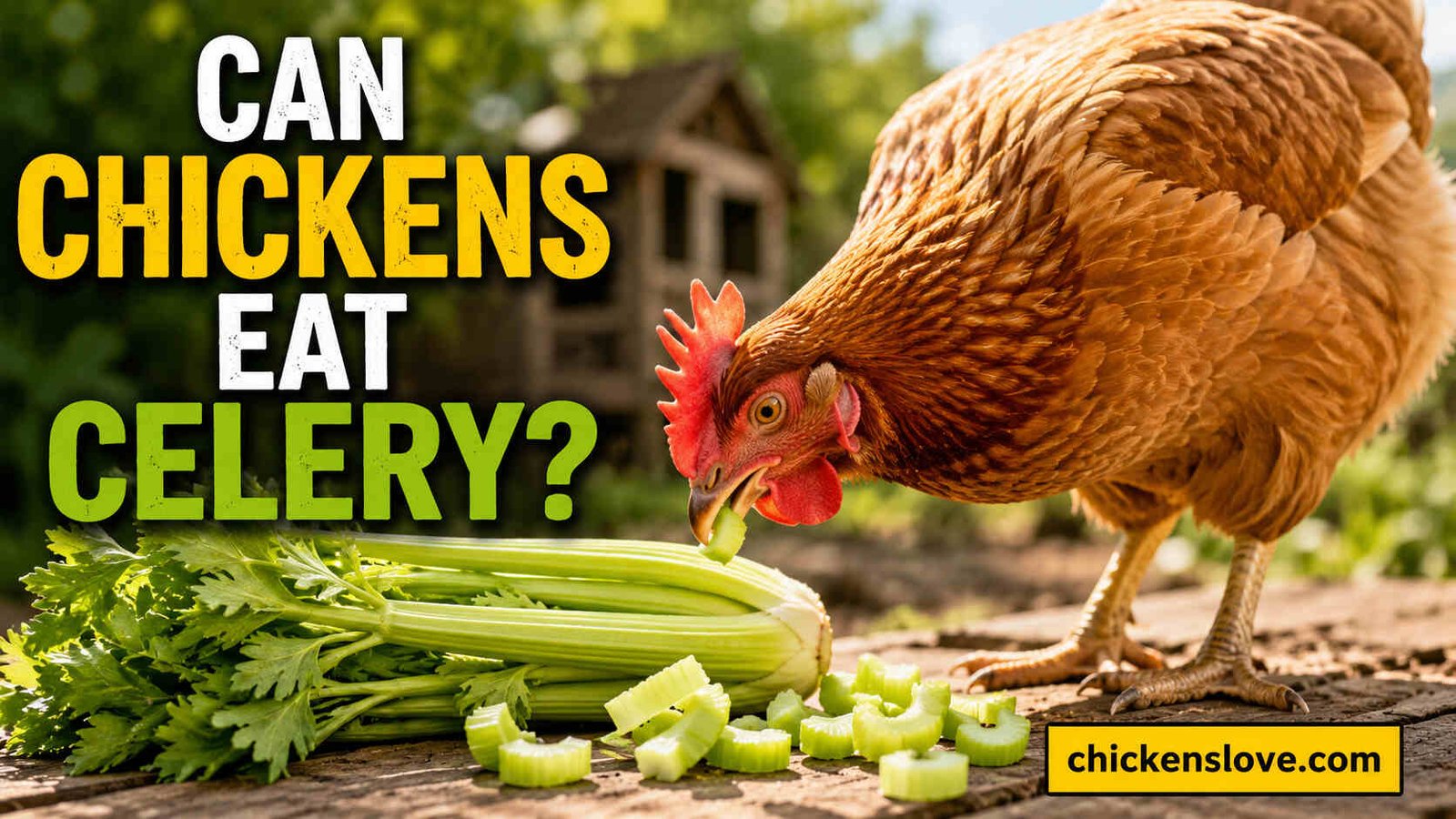
If you keep backyard chickens, you already know how curious they are about food. Mine come running every time they hear the kitchen door open. One summer afternoon, I tossed a few chopped celery pieces into the yard while making soup. The flock pecked at them right away. That moment made me wonder: can chickens eat celery safely every day, or is it just an occasional treat?
The good news is that celery can be a healthy snack for chickens when prepared the right way. It contains water, vitamins, and antioxidants that support hydration and overall wellness. Still, there are a few important feeding rules every chicken keeper should know before offering it to their birds.
Many new flock owners make the mistake of tossing whole celery stalks into the coop. Chickens often struggle with the long, stringy fibers. In some cases, large pieces may become difficult to digest. That is why proper preparation matters just as much as the food itself.
In this guide, you will learn the safest way to feed celery to chickens, how much they should eat, which parts are safe, and what mistakes to avoid. We will also compare celery with other vegetables commonly found in the kitchen. By the end, you will know exactly how to serve this crunchy snack without risking your flock’s health.
Why Celery Can Be a Healthy Treat for Chickens
Celery may look plain compared to colorful vegetables, but it still offers several benefits for backyard flocks. One thing I noticed during hot weather is that chickens love moist vegetables. Celery is made mostly of water, so it can help birds stay refreshed during warm afternoons. When temperatures rise, hydration becomes very important for laying hens and growing birds.
Another reason celery works well as a treat is its vitamin content. It contains Vitamin A, which supports eye health and immune function. It also provides Vitamin K, which plays a role in healthy blood clotting and bone support. Small amounts of antioxidants may also help the body fight natural stress caused by heat and aging.
Texture also matters for chickens. They enjoy pecking at crunchy foods because it keeps them active and curious. Celery gives them a fun feeding experience without adding too many calories. I often scatter small chopped pieces around the run to encourage natural scratching and foraging behavior. It keeps the flock busy and reduces boredom inside the coop.
Even though celery has benefits, it should never replace a balanced poultry feed. Chickens need complete nutrition from their main diet. Think of celery like a cool side snack on a hot day rather than a full meal. Treat foods should stay limited so hens continue getting enough protein, calcium, and other essential nutrients from their layer feed.
The Safest Way to Prepare Celery for Your Flock
One of the biggest mistakes people make is feeding celery whole. At first glance, it seems harmless. Yet celery contains long, fibrous strings that chickens may struggle to break down. Birds do not chew food the same way humans do. They swallow pieces quickly, which means large strands can sometimes create digestive trouble.
The safest method is to chop celery into short pieces before serving it. I usually cut stalks into bite-sized chunks around one or two inches long. Smaller pieces are easier for chickens to peck, swallow, and digest. This simple step can reduce the chance of choking or crop problems inside the flock.
Fresh celery should also be washed carefully before feeding. Store-bought vegetables may carry dirt, pesticides, or chemical residue. Rinsing under cool water removes most surface contamination. If possible, organic celery is even better because it limits chemical exposure for your birds.
Another important rule is keeping celery plain. Never mix it with butter, salt, garlic powder, sauces, or strong seasonings. Many ingredients used in human meals are not healthy for poultry. Chickens do best with simple, natural foods. Plain chopped celery gives them the benefits without unnecessary risks.
Can Chickens Eat Celery Leaves?
Many people throw away the leafy tops without realizing chickens often enjoy them the most. Can chickens eat celery leaves safely? Yes, they can. In fact, the leaves contain nutrients and soft textures that many birds find easier to peck than thick stalks. My hens usually rush toward the leafy pieces before touching the crunchy stems.
Celery leaves are softer and less stringy than the lower stalk sections. That makes them easier to digest, especially for smaller breeds. The leaves also contain vitamins and plant compounds that may support general health. Chickens naturally explore greens in the wild, so leafy vegetables often match their instincts well.
Still, moderation remains important. Too many greens at once may upset digestion or reduce appetite for balanced poultry feed. I like mixing chopped celery leaves with other safe vegetables such as lettuce or cucumber. This creates variety without overloading the flock with one single treat.
Always inspect leafy tops before feeding them. Wilted or moldy greens should never go into the coop. Spoiled vegetables can grow bacteria that may harm chickens. Fresh, clean leaves are the safest option for maintaining a healthy flock.
Understanding Portion Control and Feeding Frequency
Chickens act like every snack is the greatest thing on earth. Mine behave as if they have never eaten before whenever fresh vegetables appear. Still, even healthy treats must stay controlled. Celery should only make up a small part of a chicken’s diet because complete poultry feed contains the nutrition birds truly need.
A good rule is limiting treats to around ten percent of daily food intake. That balance helps chickens enjoy variety while still receiving enough protein, minerals, and vitamins from their regular feed. Overfeeding vegetables may reduce egg production or slow healthy growth in younger birds.
I usually offer celery once or twice each week rather than every day. During extremely hot weather, small amounts can work well as a cooling snack because of the high water content. In winter, chickens often benefit more from energy-rich foods instead of watery vegetables.
Watch your flock after introducing any new treat. Healthy chickens remain active, alert, and interested in food. If you notice loose droppings or reduced appetite, cut back on treats for a few days. Every flock reacts a little differently depending on breed, age, and overall diet.
What Age Can Chickens Eat Celery?
New chicken owners often ask, What age can chickens eat celery safely? Young chicks have delicate digestive systems, so timing matters. In the first few weeks of life, chicks should mainly eat starter feed because it contains the nutrients needed for healthy growth and feather development.
Small amounts of finely chopped celery can usually be introduced after chicks reach several weeks of age and become strong eaters. I prefer waiting until birds are active, fully feathered, and comfortable eating different textures. At that stage, tiny celery pieces can serve as a fun enrichment snack.
Baby chicks should never receive large chunks or long strings. Their digestive systems are still developing, and oversized pieces may create problems. If you decide to offer celery to younger birds, cut it very finely and provide chick grit to help digestion. Grit supports the grinding process inside the gizzard.
Adult hens handle celery much better because they have stronger digestive systems and more experience pecking tougher foods. Older birds can safely enjoy slightly larger chopped pieces. Even then, moderation remains the safest approach.
Can Chickens Eat Cooked Celery?
Some flock owners wonder whether leftovers from soup or stew are safe for poultry. Can chickens eat cooked celery? Yes, plain cooked celery is usually safe in small amounts. Softened celery may even be easier for birds to digest because cooking breaks down some of the tough fibers.
The problem comes from added ingredients. Many cooked dishes contain salt, oil, onions, garlic, or heavy seasonings. Those ingredients are not ideal for chickens and may upset their health if fed often. For that reason, only plain cooked celery should be shared with your flock.
I sometimes save extra boiled celery from homemade broth preparation. Once cooled, I chop it into small bits and mix it with other vegetables. The hens enjoy the softer texture, especially older birds with weaker beaks. Warm vegetables during cool weather can also encourage chickens to stay active.
Avoid canned celery products or heavily processed foods. Fresh vegetables remain the healthiest option for backyard poultry. Natural foods without additives are always safer than leftovers loaded with preservatives or spices.
Comparing Celery With Other Popular Chicken Vegetables
Chicken keepers often compare vegetables before deciding what to toss into the run. Celery works well, but it is not the only healthy choice. Many people also ask questions like Can chickens eat carrots because carrots are another common kitchen leftover.
Carrots provide more natural sugar and beta-carotene than celery. Chickens often enjoy both raw and cooked carrots, though hard pieces should still be chopped. Celery, on the other hand, contains more water and fewer calories. That makes it useful during hot weather when hydration matters most.
Another common question is Can chickens eat celery and carrots together. Yes, they can. Mixing vegetables creates variety and encourages natural foraging behavior. I sometimes combine chopped celery, shredded carrot, and leafy greens into a simple treat tray for the flock. The birds spend a long time pecking through the mix.
Balance matters more than the specific vegetable itself. Chickens thrive when treats remain varied and moderate. Too much of any one food can reduce interest in complete feed. A colorful mix of safe vegetables usually works better than feeding large amounts of a single item repeatedly.
Celery Seeds and Other Parts You Should Understand
Some chicken owners grow celery at home and wonder about every part of the plant. A less common question is Can chickens eat celery seeds. In tiny amounts, celery seeds are generally not considered toxic to chickens. However, they are very concentrated compared to fresh celery stalks and leaves.
Seeds contain stronger plant compounds and flavors than the watery stalk. Because chickens do not need them nutritionally, there is little reason to feed celery seeds on purpose. I personally avoid giving concentrated seeds or herbal mixes unless recommended by a poultry expert.
Fresh stalks and leafy tops remain the safest and simplest option. Natural vegetables in their basic form are easier for chickens to digest and safer for beginners to manage. Overcomplicating treats often creates unnecessary feeding mistakes.
When growing celery in the garden, avoid feeding plants sprayed with pesticides or chemical treatments. Backyard chickens love exploring gardens, so safe growing practices matter if they have access to vegetable beds.
People who keep mixed flocks often ask, Can ducks eat celery too? Yes, ducks can safely enjoy celery in moderation much like chickens. Both birds benefit from the water content and crunchy texture. Still, ducks and chickens eat differently, so preparation matters even more for ducks because they tend to swallow food quickly.
I noticed my neighbor’s ducks preferred softer celery pieces over crunchy stalks. Ducks usually enjoy moist foods that are easy to gulp down. Finely chopped celery mixed with peas or lettuce often works best. Large fibrous strings may still create digestion problems, especially if birds eat too fast.
If chickens and ducks live together, it helps to scatter treats across a wide area. Ducks can dominate food bowls because they move quickly and confidently around snacks. Spreading vegetables encourages every bird to eat at a calmer pace while reducing competition inside the flock.
Even though ducks and chickens can share some treats, their nutritional needs are not exactly the same. Ducks often require slightly different feed formulas, especially during growth stages. Celery should remain a small shared snack rather than a dietary staple for either species.
Signs You May Be Feeding Too Much Celery
Backyard chicken keepers sometimes assume healthy treats can be unlimited. I made that mistake years ago with cucumber during a heat wave. The flock loved it so much that I kept refilling the tray. A few birds later developed watery droppings because they were eating too much moisture and not enough balanced feed.
Celery can create similar issues when overfed. Since it contains a very high water content, excessive amounts may dilute the nutrition chickens receive from their regular diet. Birds may fill up on crunchy snacks while ignoring important nutrients found in poultry feed.
One warning sign is reduced egg production in laying hens. Another is soft droppings or messy litter inside the coop. Chickens need protein, calcium, and energy to stay healthy. Too many low-calorie treats can slowly weaken their overall nutrition balance.
The easiest solution is maintaining variety and portion control. Offer celery as a fun extra instead of the main attraction. Small servings a few times per week usually provide the benefits without causing digestive trouble or nutritional imbalance.
Celery During Summer Heat and Hot Weather
Summer can be stressful for backyard chickens. I remember one heatwave when my hens spent most of the afternoon sitting quietly under bushes with their wings slightly open. Chickens struggle with extreme heat because they cannot sweat like humans. Cooling snacks become very useful during those months.
Celery works especially well in warm weather because it contains so much water. Cold chopped pieces from the refrigerator can help birds feel refreshed on hot afternoons. Some flock owners even freeze small celery chunks with other vegetables for a cooling summer treat.
Hydration plays a huge role in egg production and overall flock health. Chickens that become overheated may stop laying eggs temporarily or act weak and tired. Fresh water should always remain the first priority, but watery vegetables can provide extra support during heat stress.
I like combining chilled celery with watermelon or cucumber in shallow trays during summer. The flock enjoys pecking through the mix while staying active. Watching chickens crowd around cool vegetables on a hot day feels a bit like seeing kids rush toward ice pops in July.
Common Mistakes Chicken Owners Make With Vegetables
Most chicken owners mean well when feeding treats. Still, small mistakes happen easily. One of the most common problems is offering vegetables in pieces that are too large. Chickens swallow food quickly, so oversized chunks may become difficult to process inside the digestive system.
Another mistake is feeding spoiled produce. Vegetables left too long in the refrigerator may look harmless at first glance. Yet mold and bacteria can grow rapidly. Chickens are curious eaters and may peck at rotten food unless owners remove it quickly.
Some people also season vegetables before sharing leftovers with the flock. Human food often contains salt, butter, oils, or spices that chickens do not need. Plain vegetables are always the safer option. Simple foods support better digestion and reduce unnecessary health risks.
A final mistake is replacing too much feed with snacks. Treats feel fun because chickens react with excitement, but excitement does not equal balanced nutrition. Healthy hens still depend on complete feed for protein, calcium, and vitamins needed for egg production and long-term health.
The Role of Fiber in a Chicken’s Digestive Health
Fiber often gets overlooked in backyard poultry care. Chickens naturally consume grasses, seeds, insects, and plants while scratching around outdoors. Vegetables like celery add rough texture that can encourage natural digestive activity when fed correctly.
The challenge with celery is its stringy structure. Soft fiber can help digestion, but tough strands may become difficult if swallowed in large pieces. That is why proper chopping matters so much. Small sections allow birds to enjoy the crunchy texture without overwhelming the crop or gizzard.
I think of celery fibers like long threads in fabric. A short thread causes no trouble, but tangled strands create knots. Chickens process food efficiently when owners make it easier for them to swallow manageable portions.
Providing grit also helps birds handle fibrous treats. Grit acts like tiny grinding stones inside the gizzard. Chickens without outdoor access especially benefit from supplemental grit because they cannot naturally collect enough pebbles from the ground.
Celery Leaves for Chickens and Natural Foraging Behavior
Many flock owners discover that Celery leaves for chickens may actually disappear faster than the stalks themselves. Chickens naturally enjoy leafy greens because pecking soft plants matches their instinctive foraging habits. Watching hens search through leafy scraps reminds me of tiny gardeners exploring a vegetable patch.
Leafy greens provide enrichment as much as nutrition. Chickens become bored easily in confined runs. Hanging bunches of greens or scattering chopped leaves encourages movement and curiosity. Active birds often show fewer stress behaviors such as feather pecking or aggression.
I sometimes tie leafy vegetables slightly above ground level so the hens must stretch and peck. This simple trick keeps the flock entertained for surprisingly long periods. It also helps reduce waste because vegetables stay cleaner than when tossed directly into dirt.
Freshness matters with leafy treats. Greens spoil quickly in hot weather, especially during humid summers. Remove uneaten vegetables after several hours so flies and bacteria do not build up inside the coop area.
Creating a Balanced Treat Routine for Backyard Chickens
Feeding treats should feel enjoyable rather than stressful. Over time, I learned that chickens thrive best with simple routines. Instead of constantly changing foods, I rotate a few safe vegetables and fruits throughout the week. This keeps the flock interested without upsetting digestion.
A balanced routine might include celery one day, cucumber another day, and leafy greens later in the week. Small portions create variety while still protecting the birds’ main nutritional intake. Chickens appreciate novelty, but their bodies still need consistency from quality poultry feed.
Observation is one of the best tools any flock owner has. Healthy chickens stay active, alert, and social. Their feathers look clean, and their droppings remain fairly normal. Sudden changes after introducing new treats may signal that something needs adjustment.
Backyard poultry care becomes easier when owners focus on moderation instead of perfection. Chickens are hardy animals, but thoughtful feeding habits can improve comfort, egg production, and long-term wellness.
Frequently Asked Questions
Is celery toxic to chickens?
No, celery is not toxic to chickens. Fresh celery stalks and leaves are generally safe when chopped into small pieces and fed in moderation.
Can chickens eat raw celery every day?
It is better not to feed celery daily. Chickens need balanced poultry feed as their main nutrition source, so celery should stay an occasional treat.
Should celery be peeled before feeding chickens?
Peeling is not necessary. Washing the celery well and chopping it into short pieces is usually enough for safe feeding.
Can baby chicks eat celery safely?
Young chicks can have tiny amounts once they are older and eating well, but pieces must be very small and easy to digest.
Is frozen celery safe for chickens?
Yes, small frozen celery pieces can work as cooling treats during hot weather. Just avoid serving huge frozen chunks that are difficult to peck.
Can chickens eat celery from soup leftovers?
Plain cooked celery is usually safe, but avoid leftovers containing salt, onions, garlic, butter, or strong seasonings.
Do chickens prefer celery leaves or stalks?
Many chickens seem to prefer the leafy tops because they are softer and easier to peck than thick fibrous stalks.
Final Thoughts on Feeding Celery to Chickens
So, can chickens eat celery safely? Yes, they can. Celery can be a refreshing and healthy treat when served correctly. The key is preparation. Chopping the stalks into small pieces helps prevent choking and supports easier digestion. Fresh leafy tops can also provide a fun source of enrichment for curious backyard birds.
What I love most about raising chickens is how excited they become over simple things. A handful of chopped vegetables can turn an ordinary afternoon into a little adventure for the flock. Celery may not seem exciting to us, but chickens enjoy the crunchy texture and cool moisture, especially during hot weather.
Still, balance always matters. Healthy treats should support your flock rather than replace complete nutrition. Good poultry feed remains the foundation of strong eggs, healthy feathers, and active birds. Celery works best as part of a varied and moderate treat routine.
If you care for your flock with attention and common sense, small snacks like celery can become a safe and enjoyable part of backyard chicken keeping. Happy hens often come from simple habits, fresh water, clean coops, and thoughtful feeding choices.
See Also:

Joel Callahan is a father of two daughters in Alaska. He runs a family poultry farm and works part-time as a food department adviser. He shares simple farming tips and advice.