
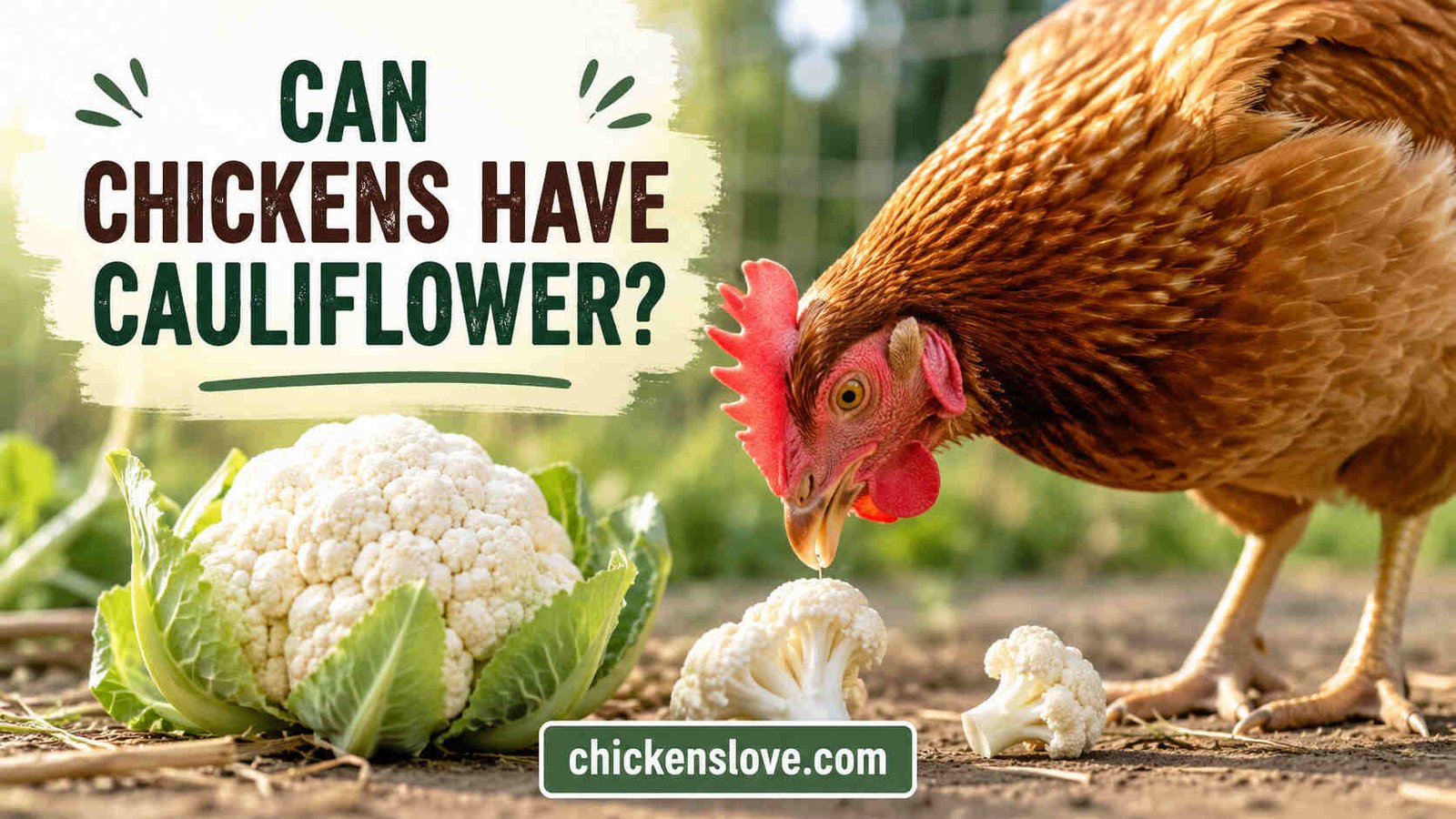
Can Chickens Have Cauliflower? Yes, they can. I like giving cauliflower to my chickens as a healthy treat because it provides useful nutrients and keeps them interested in different foods. However, I never feed it every day because chickens need a balanced diet from quality poultry feed first.
Different parts of the cauliflower should also be served in different ways. In this guide, I will explain the benefits, the safest serving methods, and the right amount to feed your flock.
Can Chickens Have Cauliflower Every Day?
I do not recommend feeding cauliflower to my chickens every day. Although it is healthy, it should only be a treat. A chicken needs complete poultry feed to get enough protein, vitamins, minerals, and energy. If I replace too much of their regular feed with vegetables, they may miss important nutrients.
That is why I keep treats below 10% of their daily diet. I usually offer cauliflower only one or two times each week. This simple routine keeps my flock healthy while letting them enjoy something different.
The amount also depends on the size of my flock. A few small florets are enough for several backyard chickens, while a larger flock can share one medium cauliflower head. I always watch how quickly they eat it and remove leftovers before they spoil. Variety is also very important because different vegetables provide different nutrients.
| Flock Size | Suggested Cauliflower Portion | Feeding Frequency |
|---|---|---|
| 2–4 Chickens | 3–5 florets | 1–2 times weekly |
| 5–10 Chickens | Half a medium head | 1–2 times weekly |
| 10+ Chickens | One medium head | Split into two servings |
I also like rotating vegetables throughout the week. Sometimes I offer fresh celery instead of cauliflower because different treats support a balanced diet. I explain another safe vegetable option in my guide about can chickens eat celery.
Nutritional Benefits of Cauliflower for Chickens
One reason I enjoy feeding cauliflower is its impressive nutritional value. It contains Vitamin C, Vitamin K, and several B vitamins that help support normal body functions. While chickens naturally produce some Vitamin C, extra amounts during hot weather or stressful times may still be helpful.
Vitamin K supports normal blood clotting, while B vitamins help the body use food for energy. These nutrients work together to support healthy growth and overall wellness without adding too many calories.
Cauliflower is also rich in fiber, which supports healthy digestion when fed in moderation. The vegetable contains antioxidants that help protect body cells from normal wear and tear.
Another advantage is its high water content. During warm weather, juicy vegetables can provide extra hydration along with fresh drinking water. Since cauliflower is naturally low in calories, it makes a much healthier snack than many processed leftovers.
Some of the biggest benefits include:
- Supports healthy digestion
- Provides natural antioxidants
- Contains valuable vitamins
- Adds moisture to the diet
- Offers a low-calorie healthy treat
I often combine cauliflower with other fresh vegetables to keep feeding time interesting. If I want another crunchy option, I sometimes prepare radishes. I have shared safe feeding tips in my article about can chickens eat radishes.
Can Chickens Have Cauliflower Leaves?
Many chicken keepers throw away the leaves, but I prefer using them as a healthy treat. Can chickens have cauliflower leaves? Yes, they certainly can. The leaves contain useful nutrients and plenty of fiber.
My chickens often peck at the leaves before touching the florets because they enjoy tearing them into smaller pieces. Fresh green leaves are usually the best choice because they contain more moisture and stay more appealing for the birds.
Before feeding, I always wash the leaves carefully to remove dirt or pesticide residue. If the leaves are very large, I cut them into smaller sections so every chicken can enjoy some.
Slightly wilted leaves are usually acceptable if they are still fresh and free from mold, but I never feed rotten or slimy vegetables. Fresh leaves always provide the best quality and reduce the chance of digestive problems.
For the safest feeding results, I follow these simple steps:
- Wash the leaves well.
- Remove damaged sections.
- Cut large leaves into smaller pieces.
- Feed fresh instead of spoiled leaves.
- Remove leftovers after feeding.
These small habits help keep my flock healthy while reducing food waste in the kitchen.
Can Chickens Have Cauliflower Seeds?
Many people ask me, Can chickens have cauliflower seeds? The answer is yes, but only in very small amounts. Natural seeds from homegrown cauliflower are generally safe when they are clean and untreated.
However, seeds should never become a regular part of the diet because chickens receive better nutrition from balanced poultry feed and fresh vegetables.
I am always careful about the type of seeds I offer. Garden seeds that come directly from my plants are very different from commercial planting seeds.
Many packaged seeds are treated with chemicals to protect crops during planting. Those chemicals are not meant for chickens and may be harmful if eaten. That is why I never feed treated planting seeds from a garden store.
Here is a simple comparison:
| Seed Type | Safe for Chickens? |
|---|---|
| Homegrown untreated seeds | ✅ Yes, in small amounts |
| Treated commercial seeds | ❌ No |
| Moldy seeds | ❌ Never |
| Fresh natural seeds | ✅ Occasionally |
Keeping seeds as a very small treat helps avoid unnecessary risks while allowing chickens to enjoy natural foods safely.
Can Chickens Have Cauliflower and Carrots Together?
Can chickens have cauliflower and carrots? Yes, they make a healthy combination when served correctly. I often prepare small mixed vegetable treats because different vegetables provide different nutrients.
Cauliflower offers vitamins and fiber, while carrots supply beta-carotene, which the body converts into Vitamin A. Together, they create a colorful snack that many chickens enjoy pecking throughout the day.
Raw carrots are perfectly safe, but I usually grate or chop them into tiny pieces because large chunks are harder for chickens to eat. Lightly cooked carrots are also fine if they are plain and soft.
I never add butter, salt, oil, garlic, onions, or spices because chickens do not need those ingredients. My goal is always to keep every vegetable simple and natural.
I usually prepare the mix like this:
- Small cauliflower florets
- Finely chopped carrots
- Fresh clean water nearby
- Served after regular poultry feed
Offering mixed vegetables occasionally helps create a more varied diet without replacing complete poultry feed.
Can Chickens Eat Broccoli?
Another question I hear often is, Can chickens eat broccoli? Yes, broccoli is also a safe vegetable for chickens. It belongs to the same plant family as cauliflower, so both vegetables offer many similar nutrients.
They contain fiber, vitamins, and antioxidants that support overall health when fed as occasional treats. My chickens usually enjoy both, although every flock has its own favorite.
When I compare broccoli and cauliflower, I notice only small differences in feeding. Broccoli often has darker green florets and slightly more Vitamin C, while cauliflower has a milder taste.
Some chickens eagerly peck broccoli heads first, while others choose cauliflower because of its softer texture. I simply observe what my flock enjoys most and rotate between the two.
| Feature | Cauliflower | Broccoli |
|---|---|---|
| Fiber | High | High |
| Vitamins | C, K, B | C, K, A |
| Water Content | High | High |
| Safe for Chickens | Yes | Yes |
Adding different vegetables throughout the week keeps feeding time exciting while supporting a balanced diet. Sometimes I also replace vegetables with other safe treats.For example, I discuss safe serving methods in my guide about can chickens eat popcorn.
Can Chickens Eat Cauliflower and Broccoli Together?
Many backyard chicken keepers ask if these vegetables can be served at the same time. Can chickens eat cauliflower and broccoli together? Yes, they can. Since both vegetables belong to the same family and provide similar nutrients, they work well as a mixed vegetable treat.
I often chop them into small bite-sized pieces before placing them in a feeding tray. This helps every chicken get a fair share and makes eating easier for smaller birds.
Even though both vegetables are healthy, I still keep portions moderate. Too many vegetables may reduce the amount of complete poultry feed my chickens eat, and that can lead to nutritional gaps over time.
I always serve vegetables after my flock has already eaten its regular feed. This simple habit helps maintain a healthy balance while still giving them something fun to enjoy.
My feeding routine usually looks like this:
- Equal amounts of broccoli and cauliflower
- Small chopped pieces
- One or two servings each week
- Fresh water always available
- Remove leftovers before they spoil
This balanced approach keeps my chickens active, healthy, and interested in different foods.
Can Chickens Eat Cauliflower Rice?
Many people wonder, Can chickens eat cauliflower rice? Yes, they can if it is plain. Cauliflower rice is simply cauliflower chopped into very small pieces. Because of its tiny size, chickens can easily peck and swallow it. I sometimes make fresh cauliflower rice at home by grating a clean cauliflower head.
My flock enjoys it, especially when I mix a small amount with other fresh vegetables. It is a simple way to add variety without changing their regular feeding routine.
However, I am always careful about store-bought cauliflower rice. Some frozen or packaged products contain salt, sauces, butter, or other seasonings. These ingredients are not healthy for chickens.
I always read the label before buying, and I only choose products that contain 100% plain cauliflower. Homemade cauliflower rice is usually the safest option because I know exactly what is inside.
Here are the simple rules I follow:
- Choose plain cauliflower only.
- Avoid added salt or spices.
- Serve fresh whenever possible.
- Offer small portions as a treat.
Following these steps allows my chickens to enjoy cauliflower rice safely without unnecessary ingredients.
Can Chickens Eat Cooked Cauliflower?
Another common question is, Can chickens eat cooked cauliflower? Yes, they can, but the cooking method matters. I prefer lightly steamed cauliflower because it becomes softer and easier for chickens to eat. Steaming also helps older chickens that may struggle with hard vegetables.
Although cooking slightly reduces some vitamins, the vegetable still provides useful nutrients and remains a healthy occasional treat.
I never feed fried cauliflower or leftovers from my dinner plate. Many cooked dishes contain butter, oil, salt, garlic, onions, or spices.
These ingredients are not suitable for chickens and may upset their digestive system. Plain cooked vegetables are always the safest choice. After steaming, I let the cauliflower cool completely before serving to avoid burns.
The table below shows which cooking methods I recommend.
| Cooking Method | Safe for Chickens? | Notes |
|---|---|---|
| Raw | ✅ Yes | Fresh and crunchy |
| Steamed | ✅ Best choice | Soft and easy to eat |
| Boiled | ✅ Yes | Plain only |
| Fried | ❌ No | Contains unhealthy fats |
| Seasoned | ❌ No | Avoid salt and spices |
Whenever I prepare vegetables, I also rotate different safe foods to keep meals interesting. Mushrooms can also be offered safely when you know which types are suitable. I explain this in my guide about can chickens eat mushrooms.
Best Ways to Feed Cauliflower to Chickens
I have tried several feeding methods over the years, and I have found that changing the presentation keeps my chickens active and curious. Sometimes I hang a whole cauliflower head inside the run. The birds spend time pecking at it, which provides both food and entertainment.
On other days, I chop the florets into smaller pieces and spread them around the yard. This encourages natural scratching and foraging behavior instead of crowding around one feeding spot.
Mixing cauliflower with other safe vegetables also creates a colorful treat that my flock enjoys. No matter how I serve it, I always wash the vegetables first and remove anything spoiled or damaged.
Fresh produce is always better than vegetables that have been sitting in the refrigerator for too long. After feeding, I collect any leftovers before they begin to rot or attract insects.
Some of my favorite serving ideas include:
- Hang a whole cauliflower head for enrichment.
- Chop fresh florets into bite-sized pieces.
- Mix with other safe vegetables for variety.
- Scatter pieces around the yard to encourage natural foraging.
- Serve clean, fresh vegetables every time.
These simple methods make feeding time more enjoyable while helping my chickens stay active and healthy.
Common Feeding Mistakes to Avoid
Even healthy vegetables can cause problems if they are not offered correctly. One mistake I often see is feeding cauliflower every single day. Too much of any treat can reduce the amount of balanced poultry feed chickens eat.
Since complete feed contains the nutrients they need, vegetables should always remain a small part of the diet. I also avoid giving huge portions because uneaten vegetables quickly become dirty and spoiled.
Another mistake is feeding moldy produce or highly seasoned leftovers from family meals. Mold can make chickens sick, while butter, salt, garlic, onions, and strong spices are not appropriate for poultry. I always inspect vegetables carefully before serving them. Fresh, clean food supports better health and reduces unnecessary risks.
Here are the mistakes I avoid:
- Feeding cauliflower every day.
- Offering moldy or rotten vegetables.
- Giving seasoned leftovers.
- Replacing complete poultry feed with vegetables.
- Overfeeding treats.
By avoiding these simple mistakes, I help my flock stay healthy, active, and productive throughout the year.
Frequently Asked Questions
Can baby chicks eat cauliflower?
Yes, but only after they are eating solid foods regularly. Offer very small, finely chopped pieces as an occasional treat while keeping chick starter feed as their main diet.
Can chickens eat raw cauliflower?
Yes. Raw cauliflower is completely safe when it is fresh, clean, and cut into manageable pieces. Most chickens enjoy pecking at raw florets without any problems.
Can chickens eat frozen cauliflower?
Yes, but thaw it first. Softened cauliflower is easier for chickens to eat. Make sure it is plain and contains no added sauces, salt, or seasonings.
Can chickens eat cauliflower stems?
Yes. The stems are safe and nutritious. I usually chop them into small pieces because thick stems can be harder for chickens to peck and swallow.
How much cauliflower should chickens eat?
Cauliflower should stay below about 10% of the overall diet. A few florets once or twice a week are enough for most backyard flocks.
What vegetables should chickens avoid?
Avoid moldy vegetables and foods containing onions, garlic, excessive salt, butter, or spicy seasonings. Fresh, plain vegetables are always the safest option for chickens.
Final Verdict
Can Chickens Have Cauliflower? Yes, they certainly can. I consider cauliflower a healthy treat when I feed it in moderation instead of every day. The florets, leaves, stems, and plain cooked cauliflower are generally safe for chickens.
I always make quality poultry feed the main part of my flock’s diet and use fresh vegetables only as occasional treats. By offering a wide variety of safe foods and proper portions, I keep my chickens healthy, active, and happy.

Joel Callahan is a father of two daughters in Alaska. He runs a family poultry farm and works part-time as a food department adviser. He shares simple farming tips and advice.