
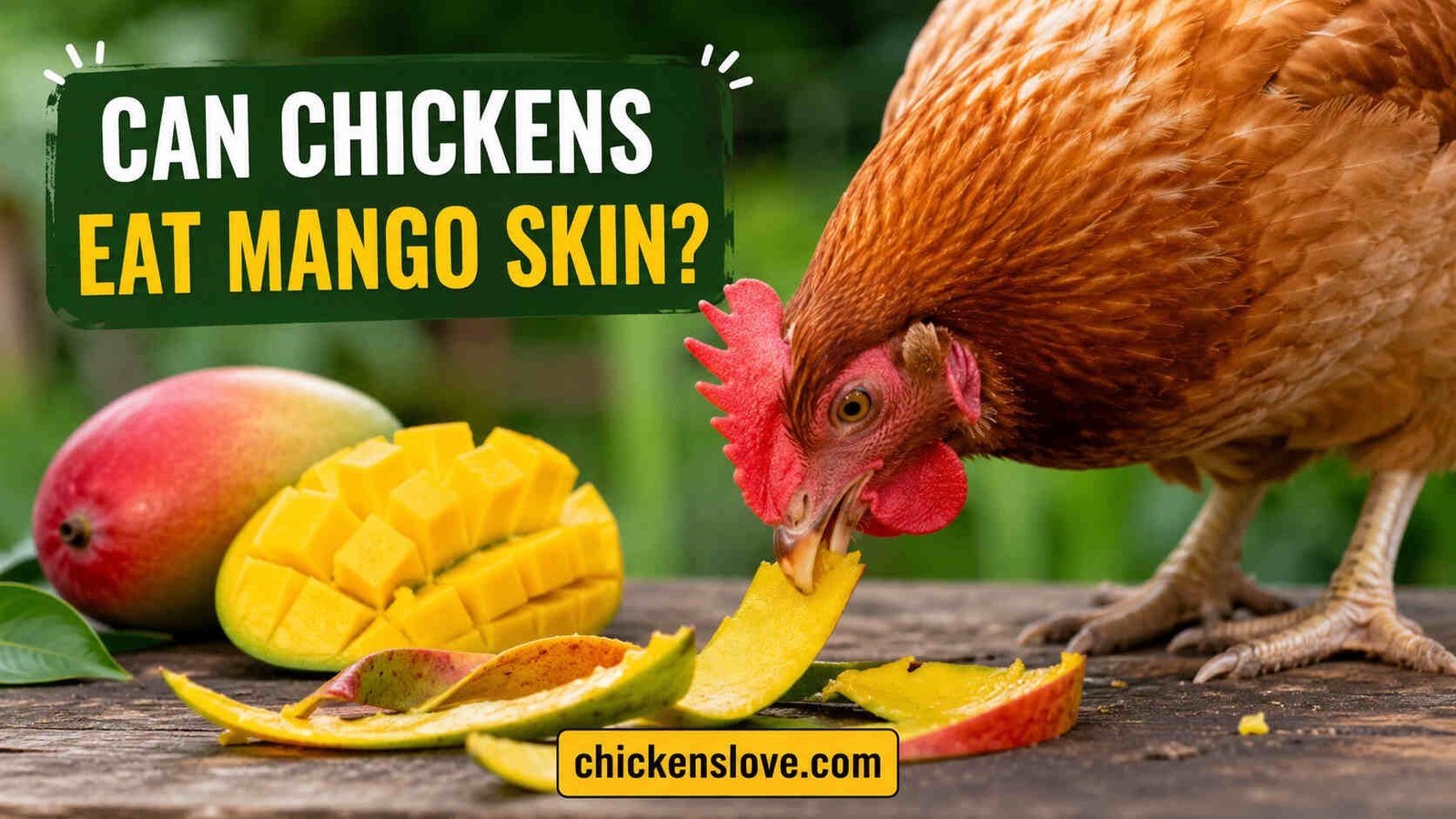
Mango is a sweet tropical fruit many people love. Chicken owners often ask, can chickens eat mango skin safely? Yes, chickens can eat small amounts of mango skin. Wash it well and feed it in moderation. A few safety tips are still important before serving it to your flock. Backyard chickens enjoy juicy fruits as treats.
Mango can provide hydration, vitamins, and enrichment. Still, some parts of the fruit are better than others. Proper preparation helps keep chickens healthy and active. If your flock already likes treats like can chickens eat banana, they may also enjoy mango occasionally.
Can Chickens Eat Mango Skin Safely?
Many chicken owners become cautious when feeding fruit skins because some peels contain chemicals, pesticides, or hard textures that are difficult to digest. Fortunately, mango skin is generally considered safe for chickens when prepared correctly. The peel contains fiber and antioxidants, which can support digestion and overall health in small quantities.
Still, the key is moderation. Chickens mainly require balanced poultry feed, while fruits should remain occasional treats. Feeding excessive mango peels may upset digestion due to the fibrous texture and natural sugars. That is why experienced flock owners prefer giving thin slices rather than large chunks.
Another thing worth considering is pesticide residue. Since commercial mangoes are often sprayed during farming and shipping, washing the fruit thoroughly is essential before feeding the skin to your flock. In the next section, it helps to understand whether mango peels themselves provide nutritional value or possible risks.
Are Mango Peels Bad for Chickens?
A common concern among poultry keepers is whether are mango peels bad for chickens or if they are completely harmless. The reality is somewhere in the middle. Mango peels are not toxic to chickens, but they can create problems if overfed or improperly prepared.
Potential Benefits of Mango Peels
Mango skins contain several nutrients that may support your flock:
| Nutrient | Potential Benefit for Chickens |
|---|---|
| Fiber | Supports digestion |
| Vitamin A | Helps vision and immune function |
| Vitamin C | Supports overall health |
| Antioxidants | May reduce oxidative stress |
These nutrients can contribute to a more varied diet and keep chickens mentally stimulated during feeding time. Chickens enjoy pecking textured foods, and fruit scraps can reduce boredom inside the run.
Possible Risks to Watch
Although the peel is edible, there are still a few concerns:
- Tough skin may be difficult for young chicks
- Pesticide residue can cause health issues
- Too much fruit may lead to loose droppings
- Moldy mango peel should never be fed
If the peel feels especially thick or rubbery, cutting it into small pieces makes eating easier. Understanding safe serving sizes also helps prevent digestive upset, which becomes important when discussing how much mango chickens should actually eat.
Can Backyard Chickens Eat Mango Regularly?
Many owners of free-range flocks ask whether can backyard chickens eat mango as a frequent snack or only occasionally. Chickens absolutely enjoy ripe mango because of its sweetness and soft texture, but regular feeding should still remain limited.
Fruit contains natural sugar, and excessive sugary treats may interfere with a balanced poultry diet. Most veterinarians and poultry nutrition experts recommend keeping treats below 10% of a chicken’s total daily intake. This allows chickens to continue eating enough protein-rich feed, which is critical for egg production and feather health.
For backyard flocks, mango works best as:
- A summer cooling treat
- An occasional enrichment snack
- A supplement alongside vegetables and grains
Serving mango once or twice a week is usually sufficient for adult chickens. Younger birds, however, require extra caution because their digestive systems are more sensitive. Since different parts of the mango vary in texture and nutrition, it also helps to know whether the flesh itself is better than the peel.
Can Chickens Eat Mango Flesh?
When discussing tropical fruits for poultry, many flock owners find that can chickens eat mango flesh is actually the easiest question to answer. Yes, ripe mango flesh is one of the safest and most enjoyable parts of the fruit for chickens.
The soft interior is easier to digest than the peel and contains hydration during hot weather. Chickens are naturally attracted to colorful, juicy foods, which makes mango flesh a highly appealing treat in backyard coops.
Benefits of Mango Flesh for Chickens
Ripe mango flesh may provide:
- Natural hydration
- Vitamin A for healthy feathers
- Potassium for body function
- Quick energy from natural sugars
Because mango is soft, even older hens often eat it comfortably. Many chicken owners mash the flesh slightly or chop it into cubes before serving.
However, even though the flesh is safe, the center seed creates a different concern altogether. The pit is large, hard, and not ideal for chickens to peck at directly. Understanding the risks of the seed is important before feeding the entire fruit.
Can Chickens Eat Mango Seed or Pit?
One of the most searched poultry questions online is whether can chickens eat mango seed or the hard pit inside the fruit. Technically, chickens should not eat the mango seed itself because it is extremely hard and difficult to digest.
The inner kernel of some fruit seeds can contain compounds that are not ideal for poultry digestion. While mango pits are not considered highly toxic like certain fruit seeds, they still create unnecessary choking or digestive risks.
Why Mango Pits Are Not Recommended
| Mango Pit Concern | Why It Matters |
|---|---|
| Hard texture | Difficult to peck and digest |
| Choking risk | Especially dangerous for chicks |
| Low nutritional value | Not worth feeding |
| Potential mold growth | Unsafe if left outside too long |
Similarly, if you are wondering can chickens eat mango pit, the safest answer is to avoid offering it altogether. Instead, remove the pit completely before serving mango pieces to your flock.
This safer feeding method ensures chickens enjoy the nutritional benefits without unnecessary hazards. Once the pit is removed, proper preparation becomes the next step for serving mango skin safely.
How to Prepare Mango Skin for Chickens
Preparing mango properly can make a significant difference in safety and digestibility. While chickens are opportunistic eaters, not every food should be tossed into the coop without preparation.
Best Preparation Methods
Wash the Mango Thoroughly
Always rinse the fruit under clean water to reduce pesticide residue. Organic mangoes are preferable if available.
Cut the Skin into Small Pieces
Thin strips or bite-sized pieces are easier for chickens to peck and digest.
Remove the Pit Completely
Never leave the large seed attached to the fruit when feeding chickens.
Avoid Spoiled Mango
Fermented or moldy fruit can upset digestion and may become dangerous for poultry health.
Proper preparation not only keeps chickens safer but also reduces waste around the coop. Clean feeding habits help discourage insects and rodents as well, which is especially important in backyard environments.
Signs Your Chickens Enjoy Mango Safely
After introducing any new treat, observing your flock is always important. Most chickens react positively to mango because of its sweetness and texture.
Healthy signs include:
- Active pecking behavior
- Normal droppings afterward
- Continued appetite for regular feed
- No unusual lethargy
If chickens suddenly develop diarrhea or avoid their normal feed after excessive fruit treats, reduce the amount offered. Treats should support enrichment rather than replace balanced nutrition.
Many flock owners rotate fruits throughout the week to maintain variety without overfeeding sugar. Mango can fit nicely into this routine when served responsibly.
Foods to Avoid Mixing With Mango Treats
Although mango itself is relatively safe, combining too many sugary or processed foods at once is not ideal for poultry digestion.
Avoid pairing mango with:
- Chocolate
- Salty snacks
- Moldy fruit
- Avocado skin or pit
- Highly processed human foods
Simple, natural treats are always the safest option for chickens. Balanced feeding keeps egg production stable while supporting feather quality and immune health.
Final Thoughts on Can Chickens Eat Mango Skin
So, can chickens eat mango skin? Yes, chickens can safely eat properly washed mango skin in moderation. The peel offers fiber and nutrients, while the soft mango flesh provides hydration and vitamins that many backyard chickens enjoy. However, the hard seed or pit should always be removed before serving.
Keeping portions small and occasional is the best strategy for maintaining a healthy flock. Mango should complement a balanced poultry diet rather than replace quality chicken feed. With proper preparation and moderation, mango can become a refreshing and enjoyable treat for your chickens.
Frequently Asked Questions
Can chickens eat mango skin every day?
It is better to offer mango skin occasionally rather than daily. Too much fruit may upset digestion and reduce feed intake.
Is mango skin safe for chickens?
Yes, is mango skin safe for chickens when thoroughly washed and cut into small pieces.
Can baby chicks eat mango peels?
Baby chicks should avoid tough peels because their digestive systems are more sensitive than adult chickens.
Can chickens eat mango peels raw?
Yes, can chickens eat mango peels raw if they are clean, fresh, and served in moderation.
Are mango peels bad for chickens?
No, are mango peels bad for chickens is mostly a myth when the fruit is properly prepared and not overfed.
Can chickens eat mango flesh safely?
Yes, ripe mango flesh is soft, hydrating, and generally easier to digest than the peel.
Can chickens eat mango seed or pit?
No, chickens should not eat mango seeds or pits because they are hard, difficult to digest, and may become choking hazards.
See Also:

Joel Callahan is a father of two daughters in Alaska. He runs a family poultry farm and works part-time as a food department adviser. He shares simple farming tips and advice.