
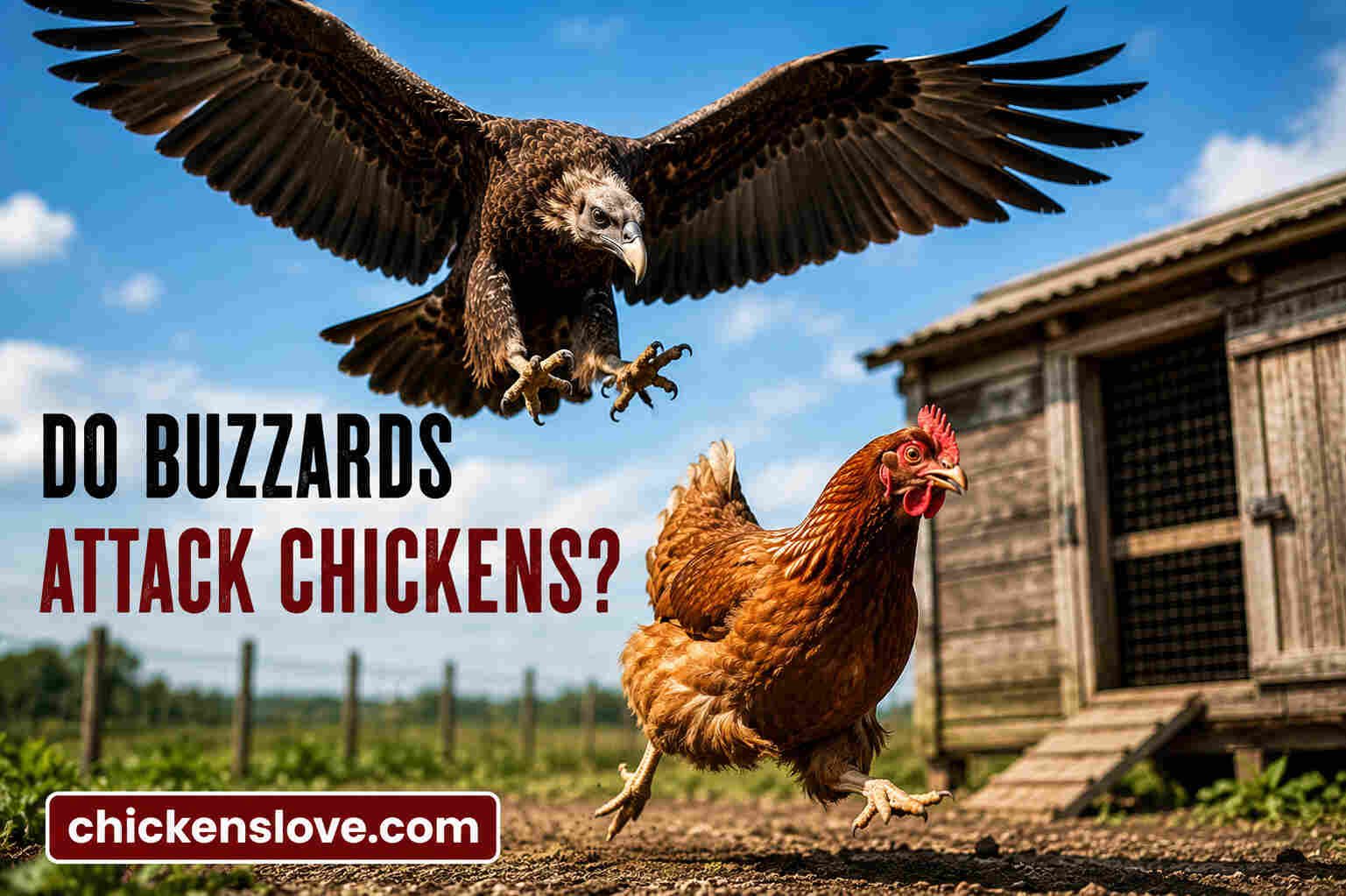
Raising chickens comes with one constant concern: predators. Among the most debated birds of prey is the buzzard. Many backyard poultry owners often search “do buzzards attack chickens” when they notice large birds circling above their coop.
This guide breaks down real behavior, risk levels, and practical poultry protection strategies using expert-level SEO, AEO, and AI-friendly structure for clear understanding and search visibility.
Understanding Buzzards and Their Natural Behavior
Buzzards are medium-to-large birds of prey commonly found soaring over open fields, forests, and rural farmlands. To understand whether they threaten chickens, we first need to understand how they survive in the wild.
Buzzards are often misunderstood. Many people assume they are aggressive hunters of live animals, but their natural feeding behavior is more complex.
What Buzzards Typically Eat
Buzzards primarily feed on small mammals, insects, reptiles, and most importantly carrion (dead animals). Their sharp eyesight helps them locate food from high altitudes.
In most environments, they prefer easy meals over active hunting. This is a key factor when evaluating do buzzards eat live chickens or only dead animals, because their diet strongly leans toward scavenging.
They are opportunistic feeders, not specialized poultry hunters. Next, we’ll look at how this behavior affects chickens specifically.
Scavenger vs Predator Behavior
Unlike hawks or eagles, buzzards are not highly adapted for attacking large, live prey. Their talons are not designed for lifting heavy animals or prolonged combat.
Instead, they behave more like cleanup crews of nature. However, under certain conditions—especially hunger or food scarcity—they may behave more aggressively than usual.
This brings us directly to the central concern: can they actually attack chickens?
Do Buzzards Attack Chickens in Real Life?
The short answer is: rarely, but not impossible.
The question do buzzards attack chickens depends heavily on environment, opportunity, and chicken size. Healthy adult chickens in a protected area are generally not their preferred target.
Buzzards are far more likely to feed on already-dead poultry than to actively hunt a living one.
When Buzzards Might Target Poultry
There are specific conditions where risk increases:
- Weak or injured chickens left exposed
- Dead chickens left in open yards
- Food scarcity in the wild
- Easy access to unattended flocks
In such rare cases, buzzards may investigate or peck at chickens, but they are not natural poultry hunters.
This naturally leads to the next concern many farmers have: backyard coop vulnerability.
Backyard Coop Risk Level
For most backyard setups, the risk remains low if the coop is secure. However, free-ranging chickens without supervision may attract opportunistic birds.
Below is a simple risk comparison:
| Situation | Risk Level | Explanation |
|---|---|---|
| Secure coop with roof | Very Low | Buzzards cannot access birds |
| Free-ranging adult chickens | Low | Buzzards may observe but rarely attack |
| Injured or dead chickens exposed | Medium | Scavenging behavior increases |
| Baby chicks in open ground | Higher | Vulnerable to multiple predators |
Next, we’ll explore whether buzzards would actually kill chickens inside coops.
Will Buzzards Kill Chickens in a Backyard Coop?
Many poultry keepers worry about will buzzards kill chickens in a backyard coop, especially when birds circle overhead.
The truth is simple: buzzards rarely break into enclosed spaces. They are not equipped for breaking fences, tearing nets, or forcing entry into coops.
However, open or poorly secured coops may still attract attention.
Conditions That Increase Risk
Risk increases when:
- The coop has open gaps or missing roofing
- Chickens are left outside overnight
- Dead birds are not removed quickly
- Other predators attract scavengers to the area
Buzzards usually arrive after other predators have already done damage.
Why Coops Are Mostly Safe
Unlike foxes or raccoons, buzzards rely on visual access. If they cannot see or reach prey easily, they typically move on.
Speaking of other predators, it’s useful to compare buzzards with more aggressive chicken hunters.
👉 A helpful comparison of ground predators like foxes can be seen in discussions such as do foxes kill chickens, which shows how ground-based predators pose a far greater threat than aerial scavengers.
Next, we’ll examine feeding behavior more closely.
Do Buzzards Eat Live Chickens or Only Dead Animals?
One of the most searched queries is do buzzards eat live chickens or only dead animals.
Buzzards overwhelmingly prefer dead animals. Their biology and hunting style make them efficient scavengers rather than attackers.
They are more likely to:
- Feed on roadkill
- Consume dead livestock
- Eat insects and small rodents
- Scavenge leftover carcasses
Live chicken attacks are extremely uncommon and usually opportunistic rather than intentional.
This leads to another important question: can they physically lift chickens?
Can Buzzards Pick Up Chickens from the Ground?
Many poultry owners ask can buzzards pick up chickens from the ground, imagining them swooping like eagles.
The reality is that buzzards are not strong enough to carry full-grown chickens. Their lifting power is limited compared to larger raptors.
Key facts:
- Adult chickens are too heavy for most buzzards
- Even small chickens are difficult to lift
- They may peck but rarely carry prey away
This makes them far less dangerous than hawks or eagles in terms of aerial attacks.
Next, we’ll examine their overall risk to poultry farming.
Are Buzzards Dangerous to Poultry Farms?
The question are buzzards dangerous to poultry farms depends on farm type and management.
Large commercial farms are generally unaffected because of controlled environments and biosecurity systems.
Small farms or free-range setups may occasionally see buzzards circling, but actual damage is minimal.
Real Impact on Poultry Farms
Buzzards typically:
- Do not attack healthy flocks
- Feed on waste or dead birds
- Help clean the environment naturally
- Rarely cause direct losses
So while they may appear intimidating, their real impact is often misunderstood.
Now let’s focus on younger birds, which are more vulnerable.
Do Buzzards Go After Baby Chicks?
The concern do buzzards go after baby chicks is more valid than adult chicken threats.
Chicks are small, weak, and easier to access, making them slightly more vulnerable than adult birds.
However, even in this case:
- Buzzards are not primary chick predators
- Ground predators pose greater danger
- Exposure matters more than predator type
Chicks left unattended in open areas are at higher risk from multiple threats, not just buzzards.
Next, we’ll summarize how buzzards compare to other predators.
Predator Comparison: Buzzards vs Other Chicken Threats
Understanding poultry safety requires comparing different predators.
| Predator | Threat Level | Behavior |
|---|---|---|
| Buzzards | Low | Scavenger, rarely hunts live chickens |
| Foxes | High | Active hunter of chickens |
| Hawks | Medium-High | Skilled aerial predator |
| Dogs | High | Opportunistic killer |
Buzzards are generally the least aggressive among common poultry predators.
Their role is more ecological cleanup than hunting.
How to Protect Chickens from Aerial Threats
Even though buzzard attacks are rare, prevention is still important for complete poultry safety.
Key protection strategies include:
- Fully covered chicken runs
- Secure roofing and fencing
- Removing dead chickens immediately
- Keeping chicks in enclosed brooders
- Avoiding open free-range during peak predator hours
These steps significantly reduce risk from all aerial birds.
Next, we’ll conclude with key insights.
Final Thoughts on Do Buzzards Attack Chickens
The question do buzzards attack chickens often creates more fear than reality. In most cases, buzzards are scavengers, not active poultry hunters.
They rarely attack healthy chickens, cannot easily lift them, and prefer dead animals over live prey. The real threat to poultry comes from ground predators like foxes, dogs, and hawks rather than buzzards.
With proper coop protection and good management, chickens remain safe even in areas where buzzards are present.
FAQ: Do Buzzards Attack Chickens?
What is the main risk of buzzards to chickens?
Buzzards are mostly scavengers and pose very low risk to healthy chickens, especially in secured environments.
Can buzzards kill chickens in a backyard coop?
It is extremely rare. They typically do not break into coops or hunt actively.
Do buzzards eat live chickens or only dead animals?
They mostly eat dead animals and rarely attack live chickens unless conditions are extreme.
Can buzzards pick up chickens from the ground?
No, they are generally not strong enough to lift full-grown chickens.
Are buzzards dangerous to poultry farms?
Not significantly. Their impact is minimal compared to other predators.
Do buzzards go after baby chicks?
They may opportunistically target exposed chicks, but it is not common behavior.
What is the biggest threat to chickens overall?
Foxes, dogs, and hawks are far more dangerous than buzzards in most environments.
See Also:

Joel Callahan is a father of two daughters in Alaska. He runs a family poultry farm and works part-time as a food department adviser. He shares simple farming tips and advice.