
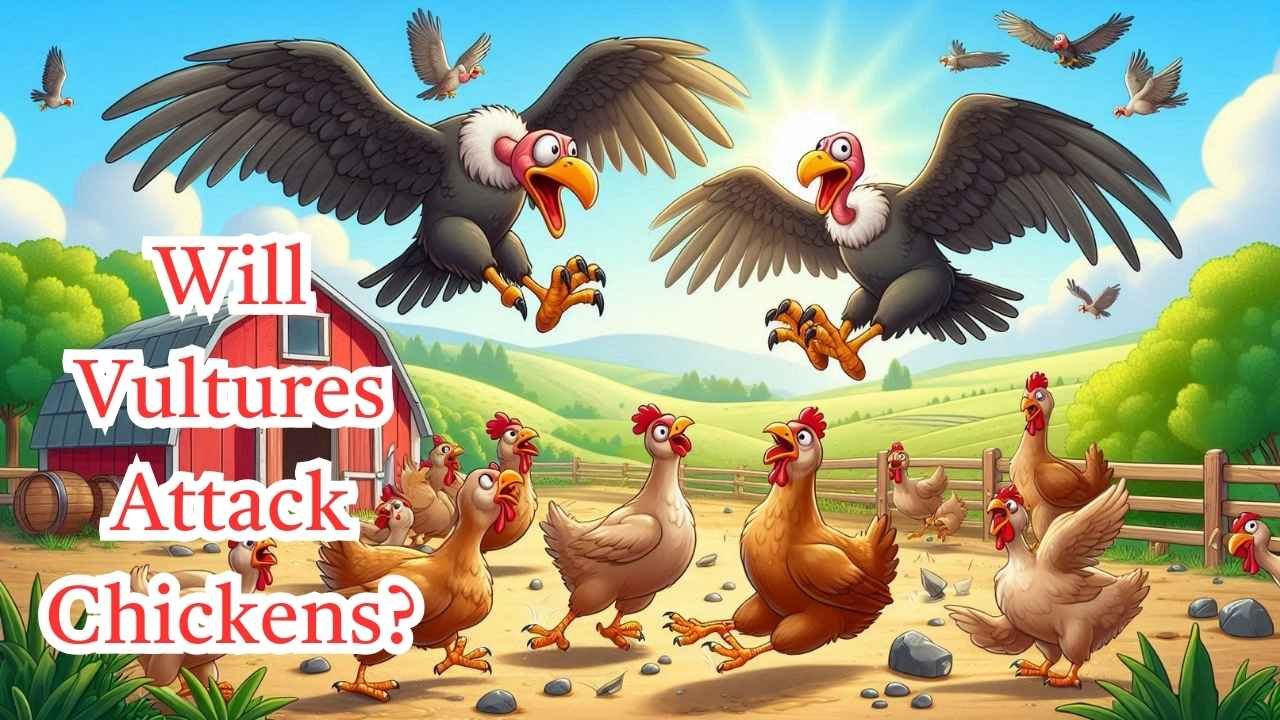
Raising chickens often feels peaceful. You watch them scratch the soil, chase insects, and cluck softly around the yard. But the moment a large black bird circles overhead, worry starts to creep in. Many backyard farmers ask the same question: “Will Vultures Attack Chickens?”
I remember the first time I saw a group of vultures flying above a rural farm. The farmer beside me sighed and said people often blame these birds when chickens disappear. Yet the reality is often very different.
Vultures have a strong reputation as scary predators, but their true role in nature is quite unique. Most of the time, they are clean-up crews rather than hunters. They search for animals that have already died.
Still, chicken keepers want clear answers. Understanding vulture behavior helps you protect your flock without misunderstanding these birds. In this guide, we will explore whether vultures really attack chickens, when risks exist, and how to keep your flock safe.
Understanding Vultures: Nature’s Clean-Up Crew
Vultures appear to be very frightening. It is enough to frighten anybody by their huge dark wings, and by their slow circles in the air. But these birds have a valuable purpose in the world.
The majority of vultures are scavengers or in other words they feed on dead animals. Their role is to dispose of carcasses before the disease contributes to spreading. This prevents farms, forests, and rural areas to be unhealthy.
Vultures do not often pursue live prey as the hawks or eagles do. They come in most cases when another predator had made the kill. In most instances, when farmers notice vultures around a deceased chicken, the chicken was dead even before the vultures reached it.
Owing to this, vultures have been unfairly accused.
Why People Ask: Will Vultures Attack Chickens
The fear usually begins with a simple scene. A farmer walks outside and finds several vultures near a dead chicken. It looks suspicious, so the birds are blamed immediately.
However, vultures are attracted to the smell of decay, not to living chickens. Their senses are designed to detect dead animals from far away.
So when people ask “Will Vultures Attack Chickens”, the honest answer is: usually no.
Most vultures prefer easy food. A fresh carcass is much easier than chasing a healthy bird.
Still, there are a few rare situations where problems may occur. Understanding those situations helps avoid confusion.
Key Physical Traits of Vultures
To understand their behavior, it helps to know how vultures are built. Their body structure tells us a lot about how they feed.
Here are a few important features:
• Large wingspan that helps them glide for hours
• Strong beak designed to tear tough animal hides
• Bald head and neck that stay cleaner while feeding
• Weak feet compared to hawks or eagles
• Very strong stomach acid that kills dangerous bacteria
These traits show that vultures are built for scavenging, not hunting.
Their feet especially reveal the truth. Hawks use sharp talons to grab prey. Vultures do not have that kind of strength.
Why Vultures Rarely Kill Healthy Chickens
One of the biggest reasons vultures rarely attack chickens is their weak gripping power.
Birds that hunt usually have strong talons. Hawks, owls, and eagles rely on their feet to capture prey. Vultures simply do not have that strength.
Instead, they rely on:
-
Strong beaks for tearing meat
-
Sharp eyesight
-
An incredible sense of smell
These abilities help them locate dead animals quickly. But they do not help much when chasing live birds.
A healthy chicken that can run or fly short distances is usually safe.
A Simple Comparison: Vultures vs Other Poultry Predators
Chicken owners often confuse vultures with other birds of prey. The following table shows the differences clearly.
| Bird Type | Hunting Ability | Typical Food | Threat to Chickens |
|---|---|---|---|
| Vultures | Weak hunters | Dead animals | Low |
| Hawks | Strong hunters | Small animals | High |
| Owls | Silent hunters | Rodents and birds | High |
| Eagles | Powerful predators | Fish and mammals | Moderate |
As you can see, vultures rank lowest as a threat.
They usually appear after another predator has already killed something.
The Unique Feeding Habits of Vultures
Vultures are specialists. They consume food which a lot of other animals do not.
The stomach acid of the female is so strong. These acids kill harmful bacteria that are present in rotting meat.
Due to this reason, vultures assist in avoiding the spread of diseases in nature. In their absence, there would be numerous carcasses lying days on, and breeding harmful germs.
It is the reason why most wildlife scholars view vultures as important environmental scavengers, as opposed to predators.
To the chicken farmers, this can be assisted with the vultures who can quickly remove the dead animals.
When Chickens Are Already Dead
This situation creates the most confusion.
A chicken dies due to illness, cold weather, or another predator. Soon after, vultures arrive to eat the carcass.
To someone walking outside, it may look like the vultures killed the chicken. But in most cases, they simply found an easy meal.
That is why many experienced farmers say vultures “take the blame” for deaths they did not cause.
Understanding this behavior answers much of the question “Will Vultures Attack Chickens.”
Will Turkey Vultures Attack Chickens?
The turkey vulture is the species most people notice in rural skies. These birds have long wings and glide slowly in wide circles.
Their wings can stretch up to six feet across. When they fly, they tilt gently from side to side.
Despite their large size, turkey vultures rarely attack living animals. They prefer to search for roadkill or animals that died naturally.
Their incredible sense of smell helps them detect gases released by decaying bodies.
Because of this behavior, the answer to “will turkey vultures attack chickens” is almost always no.
They are far more interested in already dead animals than in chasing a live chicken.
The Daily Routine of Turkey Vultures
Understanding their daily pattern can calm many fears.
Turkey vultures usually:
-
Roost in large groups at night
-
Leave the roost early in the morning
-
Search for food until midday
-
Glide slowly while scanning the ground
You will often see them flying during the morning hours, especially before noon.
If they spot something suspicious on the ground, they circle lower to investigate. But that does not mean they plan to attack.
They are simply checking for a dead animal.
Will Black Vultures Attack Chickens?
Black vultures behave slightly differently from turkey vultures.
These birds are smaller but more aggressive. They rely more on eyesight because their sense of smell is weaker.
Black vultures often travel in large flocks. Sometimes they follow turkey vultures to find food.
When people ask “will black vultures attack chickens”, the answer becomes a bit more complex.
Most of the time they still prefer dead animals. However, on rare occasions they may attack very weak or newborn animals.
This could include baby poultry that cannot defend itself.
Even then, such attacks remain uncommon.
Why Black Vultures Are Slightly More Aggressive
Black vultures compete heavily for food. Their survival often depends on finding meals quickly.
Because of this competition, they sometimes show bold behavior around farms.
They may:
• Steal eggs from nests
• Harass weak animals
• Gather in large noisy groups
Still, healthy adult chickens usually escape harm.
Most black vultures still prefer carrion, which requires less effort than hunting.
Will Vultures Attack Chickens During the Day
This is another common concern among chicken keepers.
People often notice vultures flying overhead during daylight hours. Naturally they ask: “Will vultures attack chickens during the day?”
Vultures are daytime birds. They rely on warm air currents to glide across long distances. These air currents develop after sunrise.
That is why vultures appear most often in the morning and early afternoon.
However, seeing them during the day does not mean they plan to attack chickens. They are simply searching for dead animals.
In fact, daytime is when vultures perform their clean-up work.
Signs Vultures Are Searching for Food
If you watch them carefully, their behavior becomes easy to understand.
Typical signs include:
• Wide circles high in the sky
• Slow gliding without much wing flapping
• Gradual descent toward the ground
• Gathering near roadkill or carcasses
These movements show they are investigating a smell or sight.
Healthy chickens walking around the yard rarely attract their attention.
Will Vultures Attack Chickens in the Winter
Winter changes many things on a farm. Food becomes scarce for wildlife, and animals may act differently than usual. Because of this, some farmers ask the question again: “Will Vultures Attack Chickens in the Winter?”
In colder months, vultures may struggle to find carcasses. Snow can hide dead animals, and fewer animals move around. This sometimes pushes vultures to search harder for food.
Even in winter, healthy chickens are rarely their target. Vultures still prefer already dead animals because hunting requires energy they do not like to waste.
However, winter can create one risky situation. If a chicken becomes weak, sick, or injured, it may attract vultures looking for an easy meal.
This is rare, but it explains why winter sometimes raises concern among backyard chicken keepers.
Rare Situations When Vultures Might Harm Chickens
Although uncommon, a few situations can increase risk for poultry. These moments usually involve vulnerable animals rather than healthy adult chickens.
Possible risk situations include:
• Very young chicks left unprotected
• Sick or injured chickens that cannot move well
• Dead birds left in open areas
• Large groups of black vultures competing for food
Even in these cases, vultures are often reacting to weakness or death rather than hunting healthy birds.
This is an important detail when considering the question “Will Vultures Attack Chickens.”
Most of the time, the problem starts before vultures arrive.
How Vultures Find Food So Easily
The vultures have one of the most incredible senses, which is the sense of food.
Particularly, turkey vultures have an extraordinary sense of smell. They have the ability to capture the gases emitted by dead animals at a distant place.
These gases are as a result of the natural decay of animal tissue. On detecting the odors of them, the vultures fly down to the place.
They have also great eye sight in the low flying across the ground.
The interplay of smell and sight enables the vultures to find the carcasses fast. This is the reason they are usually found in the middle of farms and that one of the animals has died.
It might seem as though they are acting suspiciously, yet they are merely reacting to the cues of nature.
How Farmers Sometimes Misjudge Vultures
I once talked to a small farmer who thought that vultures had killed some of the chicken. Having been watching his farm a few weeks, he found that something was interesting.
Whenever a chicken died, it was as a result of disease or another predator. Only later vultures came by.
It is an ordinary trend in most of the rural regions.
The vultures are the cleaning agents of nature. They eliminate those animals which die before diseases spread.
In their absence, farms would have to contended with increasing cases of rotting carcasses and unpleasant smells.
Thus although they can be frightening to view, they tend to do a useful task.
Signs Another Predator May Be Responsible
If chickens disappear or die, it is important to look for clues. Often another predator is responsible.
Common poultry predators include:
• Foxes
• Raccoons
• Hawks
• Owls
• Snakes
These animals actively hunt chickens. They have the physical tools needed to capture live prey.
If you see torn feathers, bite marks, or missing birds, a predator like a fox or hawk may be the real culprit.
Vultures usually arrive after the event, which creates confusion.
Practical Ways to Protect Chickens
Even though vultures rarely attack chickens, protecting your flock is always wise. A few simple steps can make a huge difference.
Here are effective strategies many farmers use:
• Secure coops at night
• Provide covered runs for daytime protection
• Remove dead animals quickly
• Keep young chicks in enclosed areas
• Monitor sick birds carefully
These steps protect chickens from all predators, not just vultures.
Good farm management reduces risks from wildlife in general.
Creating a Safer Chicken Environment
A safe chicken yard often includes thoughtful design. Small changes can discourage predators and reduce confusion.
Consider adding these features:
-
Roofed chicken runs
-
Strong fencing
-
Automatic coop doors
-
Raised nesting boxes
-
Motion lights near the coop
These improvements help protect chickens from hawks, foxes, and other predators that pose a real threat.
In most cases, vultures will simply fly overhead and continue searching for carrion elsewhere.
Why Vultures Are Important to the Ecosystem
Many people see vultures as unpleasant birds. Yet scientists consider them extremely valuable.
They help prevent the spread of diseases such as botulism and harmful bacteria.
Their stomach acids are powerful enough to destroy pathogens found in rotting meat. Few animals can safely eat such food.
By removing carcasses quickly, vultures reduce the chance of contamination in soil and water.
In a way, they protect farms and wildlife.
So the next time someone asks “Will Vultures Attack Chickens,” it helps to remember the bigger picture.
They are not villains. They are part of nature’s recycling system.
Quick Summary: Do Vultures Threaten Chickens?
The following table gives a simple overview.
| Situation | Risk Level | Explanation |
|---|---|---|
| Healthy adult chickens | Very low | Vultures rarely hunt live prey |
| Sick or injured chickens | Low to moderate | Weak animals may attract attention |
| Baby chicks | Moderate | Small birds are more vulnerable |
| Dead chickens left outside | High attraction | Vultures will quickly find carcasses |
| Winter food shortages | Slightly increased | Vultures search harder for food |
This overview shows that healthy chickens are generally safe.
Good flock management makes the risk even lower.
Common Myths About Vultures and Chickens
Many myths surround vultures. Let’s clear up a few of the most common misunderstandings.
Myth 1: Vultures hunt like hawks.
Reality: Most vultures prefer dead animals and rarely hunt.
Myth 2: If vultures are nearby, chickens are in danger.
Reality: They may simply be searching for carcasses.
Myth 3: Vultures always kill livestock.
Reality: Most livestock deaths blamed on vultures involve animals that were already weak or dead.
Understanding these facts helps farmers make smarter decisions.
Frequently Asked Questions
1. Will Vultures Attack Chickens
In most situations, the answer is no. Vultures prefer animals that are already dead. Healthy chickens rarely interest them.
2. Will turkey vultures attack chickens
Turkey vultures are primarily scavengers. They rely heavily on smell to locate carcasses and almost never hunt healthy chickens.
3. Will black vultures attack chickens
Black vultures can be slightly more aggressive. On rare occasions they may target weak animals or young poultry, but such events are uncommon.
4. Will vultures attack chickens during the day
Vultures are active during daylight hours. However, they usually spend that time searching for dead animals rather than attacking chickens.
5. Will vultures attack chickens in the winter
Winter food shortages can increase scavenging activity. Even then, healthy chickens are rarely targeted.
6. How can I keep vultures away from my coop?
Remove carcasses quickly, keep chickens healthy, and use covered runs. These steps prevent vultures from becoming interested in your yard.
7. Are vultures dangerous to farmers?
Vultures are generally not dangerous to humans. They avoid confrontation and focus mainly on scavenging.
Final Thoughts
The question “Will Vultures Attack Chickens” often comes from fear and misunderstanding. Large birds circling overhead naturally make farmers uneasy.
But the truth is much calmer.
Majority of vultures are the cleaners of the nature. They also like dead animals and they hardly bother healthy poultry. Once they come close to the chickens, they do so in reaction to something that is already dead.
The explanation of their behavior enables their keepers to prevent unnecessary worrying.
Farmers can easily protect the chickens by ensuring that they are healthy, clearing meaty bodies, and having secure coops.
And vultures do in a lot of ways good service to the farms keeping the environment clean.
Therefore when you come across the next one flying silently across the air please bear in mind that it might be just in its silent duty in the nature.
See Also:

Joel Callahan is a father of two daughters in Alaska. He runs a family poultry farm and works part-time as a food department adviser. He shares simple farming tips and advice.