
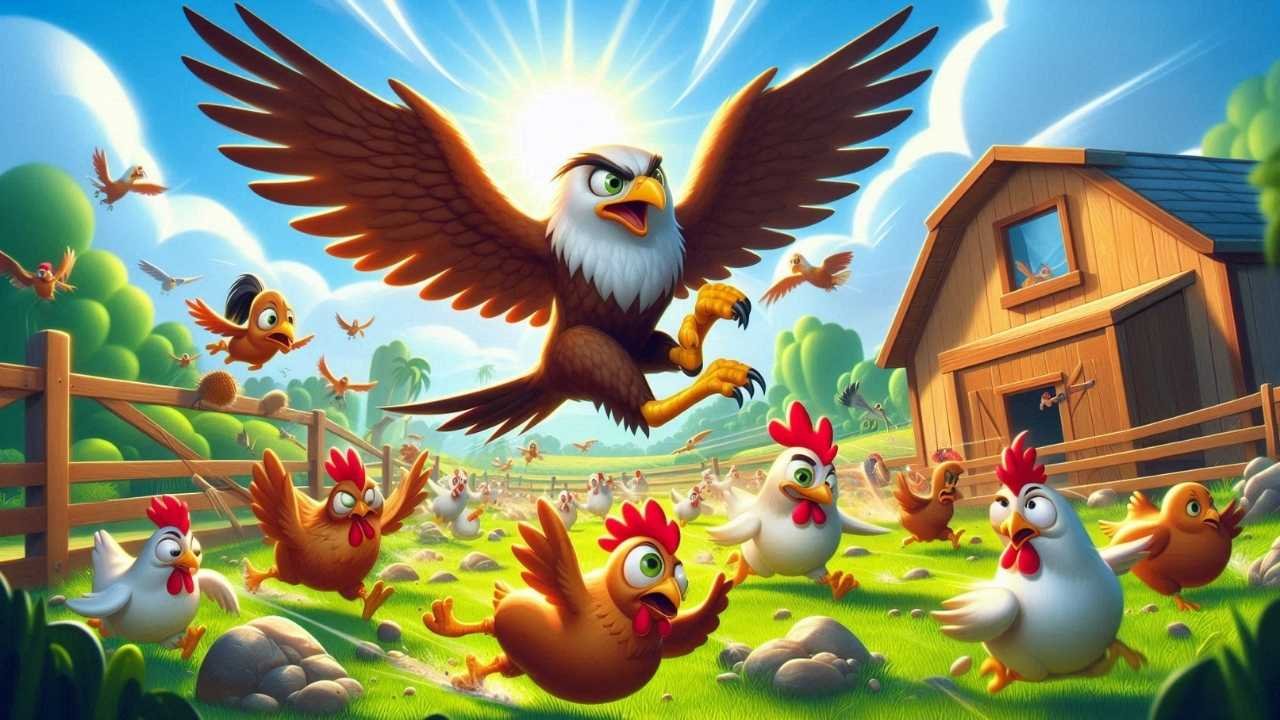
Do Hawks Kill Chickens is a common concern for backyard flock owners. Hawks are excellent, and they are effective predators that can cause fear in poultry owners. Hawks are predators and are reputed to be sharp beaked, sharp eyed and very swift and this can be a real threat to your chickens.
You must know when you own a chicken flock whether the hawks have the ability to kill your chickens, how they hunt as well as how you can ensure your chicken flock is not devoured by these flying predators.
In this article we will address the behavior of hawks towards the chicken and whether they are a real threat and what can be done to ensure that your chickens are safe.
What Are Hawks?
Hawks are a species of birds of prey, and they are numerous species worldwide. They are well known in their strong hunting skills, good eye sight and incredible skills in the air.
Hawks have different species such as red-tailed, Cooper, and sharp-shinned hawks, among others and have been known to prey on small creatures. Although they normally attack small mammals, birds and reptiles, they can also attack chickens.
Hawks can hunt effectively in the air, snatching a prey with their sharp claws and shredding it with a powerful beak.
They are able to see their prey as they are flying in the sky, thus becoming a consistent threat to free-range chicken particularly those that are not in houses or enclaves.
Do Hawks Kill Chickens?
Yes, hawks may kill chickens and it is known that they are a threat to adult chicken and chicks.
Although the hawks normally feed on small birds and mammals, chickens are easy prey when they are out in the open areas without much cover.
Hawks are quick, nimble, and accurate hunters and pose a risk to any chicken that has not been guarded.
How Hawks Hunt
Hawks do not hunt far, and they prefer hunting in the air, with their vast vision to identify prey at a high altitude. As soon as they set their eyes on a chicken, they rush at great velocities, in which their vicious talons snatch their victim.
When a hawk surprises a chicken he is normally killed immediately. They are also able to hunt in forests and perch on the tree or fences through which they scan the potential prey.
When Are Chickens Most Vulnerable
Free-ranging chickens in unprotected open areas are at the highest risk of the attacks of the hawks. The Hawks are most likely to attack in the daytime, when the chickens are foraging in the fields or in the open yard.
Hawks will have an easy target over the chickens in case there is minimal cover as in the case of bushes or trees.
This is the reason why most poultry owners would have their chickens confined in enclosed coops or a place that has some form of covering particularly during the daylight.
Chickens either smaller or weaker, e.g. chicks or old birds, are the target of hawks. Nevertheless, they are able and will also attack adult hens, especially when the hen is startled or has not managed to fly away fast enough.
See Also: Do Foxes Kill Chickens?
Protecting Your Chickens against Hawks
Although the issue of hawks attack may be of great concern, you can accomplish a number of actions to help keep your chickens safe. These are some of the practical solutions that can be used to assist in protection of your flock:
Shelter and Areas of Cover
The most effective means of keeping your chickens away is to ensure that you keep them well sheltered.
An enclosed place with a roof on top of a covered chicken run will ensure that the hawks are not in a position to swoop around and take away your chickens. Netting, wire mesh, or a solid roof can also be used to create a place where hawks cannot reach.
Oversee Free-range Chickens
Should you have your chickens free-range, you must have a supervisory eye on them and in particular, when it is daytime, hawks are the most active. Remain outside with them to keep off anything that can be a means of prey. The presence of a human being in the area is sufficient to scare the hawks away.
Apply Reflective Objects or Decoys
Large birds of prey are also afraid of hawks and thus decoys such as fake owls or hawks may be used to scare them away.
Aluminum foil strips or shiny discs can also be hung up in places where hawks may be, as reflective objects. These items produce motion and glitz, so the hawks may perceive them as a danger, or feel lost in their path, and, therefore, prefer to avoid them.
Fix a Hawk Net or Wire Over Coop
In case you have a chicken run, you might install a hawk net, or overhead wire so that your chickens are not attacked by air predators.
The mesh must be small enough to allow a hawk not to squeeze, but tough enough to support a bird of prey. The mesh is also supposed to be tight in order to prevent any unintentional traps.
Use Guard Animals
Other farmers and poultry owners employ guard animals in keeping their chicken safe against hawks and other predators. Guard dogs, in particular those that have been trained to guard against livestock might act as an effective deterrent.
In the same vein, guinea fowls have been known to warn chickens of some imminent danger such as hawks and it can be implemented as an extra source of protection.
Provide Hiding Spots
Their chicken should be provided with hiding areas so that the chicken may seek shelter in case of a hawk attack. Such concealed places may involve low trees or bushes as well as buildings such as sheds and chicken houses.
The more hiding places your hens have to seek shelter, the more they are going to be safe when a hawk comes flying by.
Hawks Keep Your Flock in the Coop
It might be prudent to keep your chickens indoors or in a secure run, during the period of the year when the hawks are the most active. Hawks are also very stubborn around their hunting seasons and therefore restricting their access to the open areas can assist in averting attacks.
See Also: Do Minks Kill Chickens?
Frequently Asked Questions (FAQs)
How shall I know whether a hawk has beaten my hen?
You can see a slain chicken whose neck or head was broken. Hawks normally attack their prey using their talons and attack swiftly. In a case where you encounter a dead chicken with little evidences of being consumed, then this might be a case of an attack by a hawk.
Do hawks kill adult chickens?
Yes, hawks do kill mature chickens, and more so when they are taken by surprise or they have no place to conceal themselves. Nevertheless, hawks tend to attack smaller or weaker chickens, e.g. chicks or older birds.
What can I do to prevent the hawks around my chickens?
To prevent attacks of hawks, keep chickens safe by housing and covering areas, watching over free-range chicken, using decoys or reflective objects, installing a net of hawks or a wire around the coop, and using guard animals. It can also help to provide hiding places and avoid exposing your chickens to the open areas.
Do hawks prefer to attack chickens at certain periods?
Yes, hawks are active most especially in the spring and summer seasons when they are feeding their babies. The attacks of the hawks on chickens are more common during this period. This is the reason it is better to be particularly attentive during such seasons.
Can a hawk carry off a chicken?
Hawks can take smaller birds, but even the adult chicken is usually too fat to be picked by most species of hawks. Nevertheless, they can just as well kill a chicken fast by seizing one with their talons and slaughtering it.
See Also: Do Weasels Kill Chickens?
Conclusion: Do Hawks Kill Chickens?
Do Hawks Kill Chickens often involves chicks or smaller birds. Hawks can in fact kill chicken, particularly in cases where they are free ranging in open fields with no protection.
These have been well trained predators who use their sharp talons, their sharp eyesight and their fast flight to prey and one of the prey they preys on are the chicken.
Nevertheless, the risk of being attacked by hawks can be greatly minimized with the appropriate precautions.
Some of the most effective methods of keeping your chickens out of the reach of these aerial predators include provision of adequate shelter, the use of decoys, and the availability of large numbers of hiding points.
With proper attention and strategic preventive actions, you can ensure that your flock is not attacked by hawks and other possible attacks. Having the proper attention and care, your chickens will be safe and happy even against possible predators.

Joel Callahan is a father of two daughters in Alaska. He runs a family poultry farm and works part-time as a food department adviser. He shares simple farming tips and advice.