
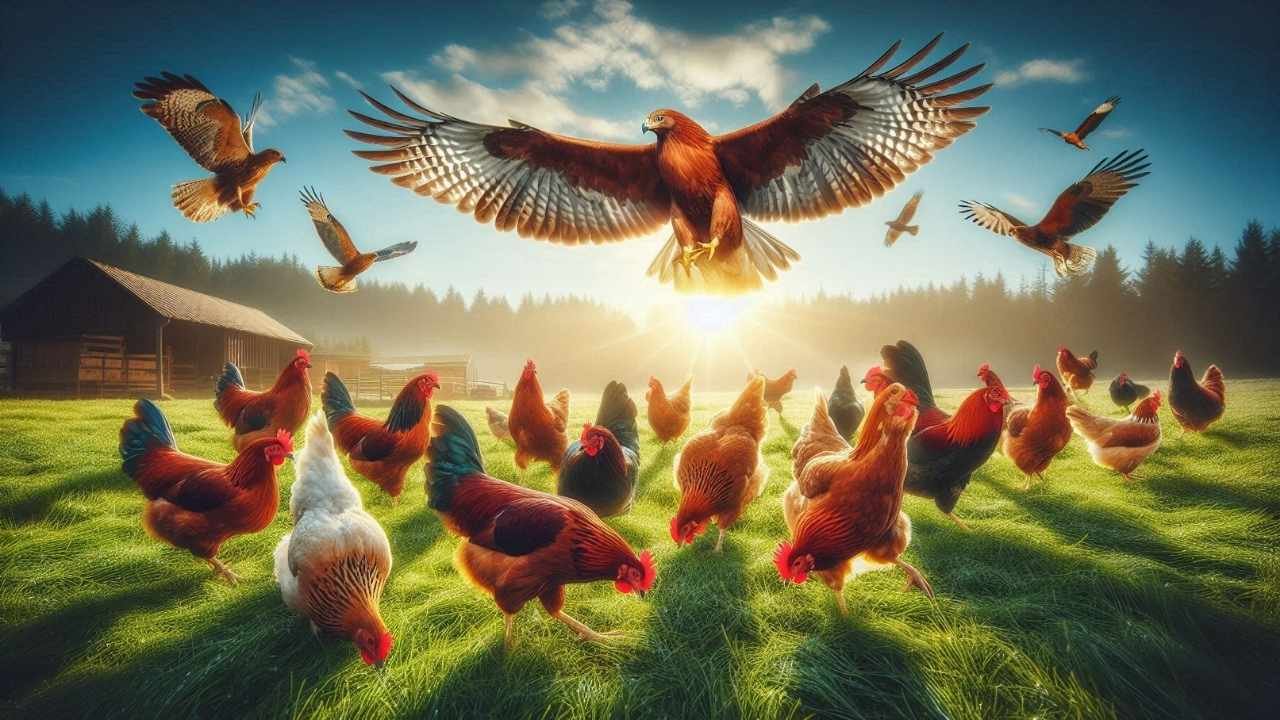
If you keep chickens, you’ve probably experienced that gut-wrenching moment: a shadow swoops down, and your beloved hens scatter in panic. Hawks are natural predators, and watching them eye your flock can be stressful. But here’s the hard truth: can you kill a hawk if it attacks your chickens?
The short answer is no. Hawks are safeguarded by the federal Migratory Bird Treaty Act that criminalizes the killing of them, their trapping or harming. Breach of this law may result in huge penalties, legal hassle and even imprisonment.
Although it may seem natural to defend your chickens by all means, it is imperative to realize that the cost of hurting a hawk is much greater than the immediate gratification of eliminating the predator.
There exist, happily, good, legal measures to insure the safety of your flock without violating the law. Here are some of the reasons why it is illegal, the consequences of leaving it illegal, and practical ways to scare away the hawks in this guide.
Contents
- 1 Why Hawks Attack Chickens
- 2 Legal Consequences: What Is the Penalty for Killing a Hawk?
- 3 Safe and Effective Ways to Protect Your Chickens
- 4 Why Is It Illegal to Kill a Hawk?
- 5 Additional Protective Strategies for Your Flock
- 6 Understanding Hawk Behavior for Better Protection
- 7 Common Misconceptions About Hawks and Chickens
- 8 FAQs About Hawks and Chicken Protection
- 8.1 Q1: Will a hawk kill my chickens?
- 8.2 Q2: Does it make you kill a hawk because it attacks your chickens?
- 8.3 Q3: What is the punishment of killing a hawk?
- 8.4 Q 4: Why is it against the law to kill a hawk?
- 8.5 Q5: What do I do legally to ensure that my chickens are not attacked by hawks?
- 8.6 Q6: Do roosters prevent attacks by hawks?
- 8.7 Q7: Do hawks revisit the places they had not been successful in hunting?
- 8.8 Q8: Is it possible to condition a hawk not to attack my chickens?
- 9 Final Thoughts: Can You Kill a Hawk if It Attacks Your Chickens?
Why Hawks Attack Chickens
Hawks are predatory in nature and chickens are an easy prey due to their size and slow movement. In most cases, the hawks prey on small birds or weak animals due to the fact that it consumes less energy to hunt. Although your flock may appear safe, when you leave chickens in open places when they are most likely to be preyed upon, you will be calling predators to them.
Others who have backyards will ask, Will a hawk kill my chicken? Yes, yes, hawks do and will kill chickens under the right conditions. Particularly at risk are young chicks and free-ranging hens. But the alert adult hens which are covered stand a far higher chance of escaping predation. The point of learning such behavior is the fact that you will eventually focus on how to protect the flock rather than working on how to hurt the hawk.
Legal Consequences: What Is the Penalty for Killing a Hawk?
Before you even consider taking a hawk down, it’s important to know the law. The Migratory Bird Treaty Act protects all hawks, making it illegal to harm them. The penalties for killing a hawk are severe and can include:
-
Fines up to $15,000 per violation
-
Prison sentences of up to six months
-
Civil penalties for property damage claims if the act endangers public safety
These penalties exist because hawks play an essential role in the ecosystem. They control rodent populations and help maintain ecological balance. Killing one may feel like instant justice, but it’s a risk far too high for the sake of a few chickens.
| Aspect | Legal Implication |
|---|---|
| Killing a hawk | Illegal under federal law |
| Fines | Up to $15,000 per offense |
| Jail time | Up to 6 months |
| Civil liability | Possible if property damage occurs |
As you can see, the risks are substantial. The law is not just a suggestion—it’s enforced, and breaking it can have lasting consequences for you and your family.
Safe and Effective Ways to Protect Your Chickens
Now that we understand that killing a hawk is illegal, let’s focus on practical, legal ways to keep your flock safe. These methods are tried and tested by backyard chicken keepers everywhere.
1. Covered Runs
Enhancing the run of chickens with netting or hardware cloth is one of the most effective and easiest means of protecting the chickens. This does not allow hawks to fly down and your flock is safe to fly. Covered runs need not be costly, they can be self-help with some rolls of robust wire. With the overhead barrier providing a safe landing barrier, you eliminate the ability of the hawk to fly and to be unexpected, and this is why this is the technique that a lot of chicken owners experienced in practice would swear by.
2. Visual Deterrents
Hawks are careful predators and some visual signals can also help them to change their minds. Surprising them by hanging reflective materials such as old CDs, pie tin plates, mirrors or holographic tape around your yard makes them feel dizzy and frightened. These reflecting surfaces indicate movement or people and these can drive away a hawk. Although this can be considered an easy task, it works surprisingly well in collaboration with other safeguarding strategies.
3. Natural Protection
A rooster is a rather unexpectedly good defensive mechanism to add to the flock. Roosters love to protect hens, and they will scream when danger approaches. They might not scare a hawk, but by being there, they make the flock more vigilant and may turn your yard into a place less attractive to predators. Others go so far as to have geese or other guard birds as an added defence and this will further frighten hawks to attack your chickens.
4. Hazing Techniques
In case a hawk becomes a frequent guest, it can be harassed with the help of hazing methods. Hosing down, banging, or using an air horns is a temporary solution to distract a hawk, and condition the hawk to avoid your premises. Patience and regularity are needed in this approach; nevertheless, it is fully legal and does not interfere with the protection of the status of the hawk.
5. Temporary Confinement
When the hawks are around in large numbers it may also help to put your chickens in the coop a few days to make your place unattractive to them. Hawks tend to fly away when they find their hunting ground unsuccessful. Although temporarily confined, it is a minor sacrifice to be safe and within legal bounds.
Why Is It Illegal to Kill a Hawk?
Many chicken owners wonder, “Why is it illegal to kill a hawk?” The reason lies in conservation. Hawks are crucial for controlling pests like rodents and maintaining healthy ecosystems. Their populations are monitored to prevent decline, and indiscriminate killing could destabilize the environment.
Further, the Migratory Bird Treaty Act is an extension of the desire to save all of the wildlife in the United States. Although a hawk might be threatening to your chicken, the law still puts more emphasis on the ecologic equilibrium and the survival of the species as compared to personal property. This attitude can be understood to enable the farmers in the backyard to decide against an attitude of aggression and adopt the attitude of protection and coexistence.
Additional Protective Strategies for Your Flock
Beyond covered runs and visual deterrents, there are more creative ways to protect your chickens while staying completely legal. Combining multiple strategies usually yields the best results.
1. Motion-Activated Devices
Motion activated lights or sprinklers can also be installed to scare away the hawks. Such bursts of lights or water emulate the actions of humans so that the hawk feels there is a danger in your yard. Motion activated devices are especially effective in places where your flock is free to roam and they need minimum maintenance after installation. With time, hawks will get to avoid such areas and will not attack the bird without injuring him.
2. Simulation of Predators and Decoys.
Raptors can be scared away by fake owls, silhouettes of hawks or even statues of predatory animals. A hawk can be scared off before attacking your chicken by putting them in strategic spots around your chicken. The secret of this is to change decoys now and then; hawks are clever hunters, and they will disregard objects that do not move. It is an inconspicuous, inexpensive and entirely legal technique that is popular with amateur poultry farmers.
3. Strategic Coop Placement
When constructing a new chicken house, it is advisable to locate it close to the natural cover like trees, bushes or hedges. Natural cover also offers hiding places to the hens thus reducing their visibility to aerial predators. Even a partial shade or some high plants in the immediate vicinity of the run will decrease considerably the possibilities of a hawk seeing your flock in the distance.
4. Routine Vigilance
The easiest way is sometimes to keep awake. The activity of hawks, such as time of day, flight patterns, or seasonal activities could be used to predict attacks. Practical and entirely legal defense Be proactive, i.e., bringing the chickens inside during high risk periods.
Understanding Hawk Behavior for Better Protection
Being familiarized with the ways of thinking of the hawks can enhance your fortifications. Hawks are daytime hunters and they find it easy to see their prey in open areas. When the backyard is littered with hunting barriers or covered areas, it is less efficient in hunting.
Another response of Hawks to recurrent disturbances. The sound, people, or even the waves of flags may make your property appear unsafe. You can make your yard a no-go zone and do not hurt the bird by putting environmental barriers and behavioral deterrents together.
Common Misconceptions About Hawks and Chickens
Many chicken keepers fall into traps of misinformation. Here are a few myths clarified:
-
Myth 1: Hawks only attack at dawn or dusk.
Fact: Hawks hunt throughout the day, though early morning and late afternoon are peak times. -
Myth 2: You can legally kill a hawk if it attacks your flock.
Fact: Absolutely not. Federal law protects all hawks. Killing one can result in fines and jail time. -
Myth 3: Visual deterrents don’t work.
Fact: When used consistently and combined with other methods, reflective objects and decoys can be very effective.
FAQs About Hawks and Chicken Protection
Q1: Will a hawk kill my chickens?
Sure hawks are predators and can kill chicken including chicks and free ranging hens. This risk is greatly reduced by having secure runs and deterring your flock.
Q2: Does it make you kill a hawk because it attacks your chickens?
No. The Migratory Bird Treaty Act finds it illegal. Criminal penalties include fines, jail, and civil penalties in case one tries to kill a hawk.
Q3: What is the punishment of killing a hawk?
Punishments are fines of up to 15000 dollars, up to six months imprisonment and civil responsibility. The effects of the law are harsh since hawks are vital to the ecosystem.
Q 4: Why is it against the law to kill a hawk?
Hawks are conserved to ensure that there is ecological balance. They manage rodents and pests and are a part of an overall conservation program.
Q5: What do I do legally to ensure that my chickens are not attacked by hawks?
Apply covered runs, deterrents which are visual, motion activated, decoys, and temporary confinement. These are safe, effective and legal methods.
Q6: Do roosters prevent attacks by hawks?
Roosters do warn hens of danger and they may deter some hawk activity although not foolproof. It is best to combine roosters with other deterring factors.
Q7: Do hawks revisit the places they had not been successful in hunting?
Usually not. In case your house or land becomes regularly unsafe or unproductive, hawks will go elsewhere in search of prey.
Q8: Is it possible to condition a hawk not to attack my chickens?
You can not directly train the bird not to fly into your yard, but over time, he will be conditioned through hazing (loud bangs, sprays of water).
Final Thoughts: Can You Kill a Hawk if It Attacks Your Chickens?
Watching a hawk circle your backyard can be nerve-wracking. The instinct to protect your flock is natural, but understanding that you cannot kill a hawk if it attacks your chickens is essential. Breaking the law not only puts you at risk legally but also disrupts the delicate ecological balance.
The good news is that protecting your chickens is completely possible with patience, creativity, and consistency. Covered runs, visual deterrents, decoys, roosters, and vigilant observation can keep your flock safe. By focusing on prevention rather than harm, you create a secure environment for your chickens while respecting wildlife laws. In the end, coexistence is the best solution—a win for your flock and a win for nature.
See Also:
Do Groundhogs Attack Chickens?
Will Vultures Attack Chickens?

Joel Callahan is a father of two daughters in Alaska. He runs a family poultry farm and works part-time as a food department adviser. He shares simple farming tips and advice.