
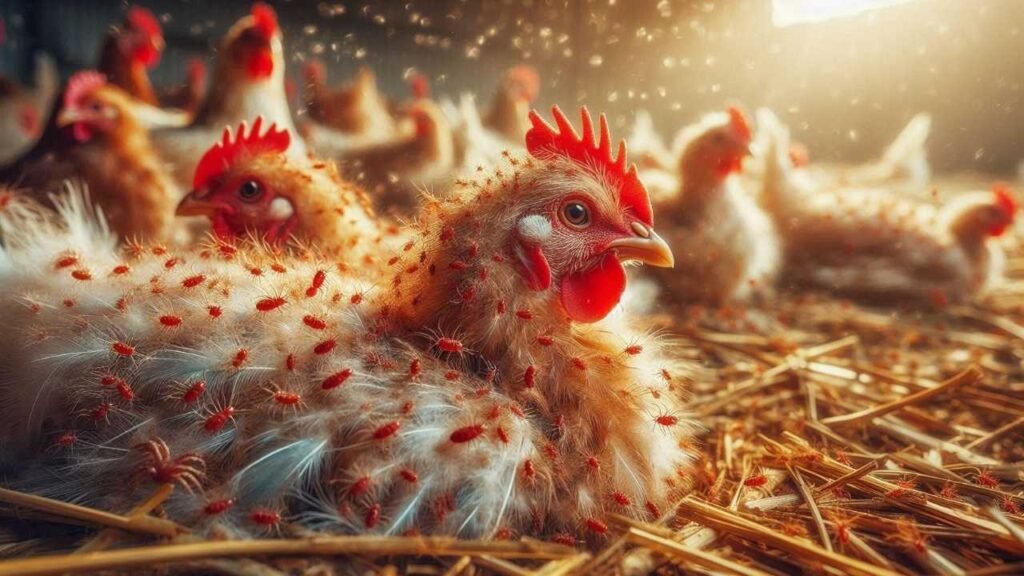
Can mites kill chickens is a serious question for flock owners. As a chicken owner, I have gone through numerous difficulties in terms of ensuring my flock is healthy. The problem of mites was among the problems I had not anticipated to be faced with.
Previously, I believed that mites were a minor inconvenience, but I soon discovered that they could be deadly to my chickens. Then, I had to ask myself the following question: do mites kill the chickens? As it happens, the answer is yes, they can.
Mites are small blood sucking parasites that may cause a lot of discomfort to chickens. In extreme situations, they may cause anemia, poor health and death.
I have also understood that mite infestation should be dealt with in time before it becomes uncontrollable. In this paper, I will tell you all I know about mites, their effect on chickens, and the 6 best methods to eliminate them.
Contents
- 1 What Are Mites?
- 2 Can Mites Kill Chickens?
- 3 6 Ways to Get Rid of Mites in Chickens
- 4 Preventing Future Mite Infestations
- 5 Conclusion: Can Mites Kill Chickens?
- 6 FAQs
- 6.1 What do I do when I know that my chickens have mites?
- 6.2 Is there a possibility of mite spreading to other animals or individuals?
- 6.3 Is diatomaceous earth a safe natural remedy to chicken?
- 6.4 What should I do to maintain my chicken coop clean enough to keep off mites?
- 6.5 What shall I do when the health of my chicken was affected seriously by mites?
What Are Mites?
Mites are minute parasites that feed on the blood of chicken. Some of the mites that may attack your flock are red mites, northern fowl mites and scaly leg mites. These small nuisances may give your chickens a variety of problems, such as skin irritation and loss of feathers, as well as severe health disorders, such as anemia.
Although mites may look small, they may have a significant effect on the lives of chickens. I had never thought of the extent to which they would harm me until I noticed the physical symptoms on my own chickens.
They suck the blood of the chickens which leaves them unable and stressed. In other instances blood loss may result in death particularly among the young or weak chicken.
Can Mites Kill Chickens?
Yes, mites can kill chickens if infestations are severe and left untreated.
The first time when I discovered mites in my flock, I was not aware of how severe the problem might be. However, initially it appeared to be a minor inconvenience but the more I saw the more I was aware of how serious the issue was. Certainly mites can kill chicken provided an infestation is not checked.
They are especially immoral since they may result in serious blood loss and, consequently, in anemia. This causes the weakening of the chickens with time and at worst, death.
Although mites are minute, they may create huge issues to your chickens. With heavy infestations, chickens can also look lethargic with pale combs and cease production of eggs. In case the infestation is so heavy, it may cause death particularly when the chickens are already weak through old age or disease.
6 Ways to Get Rid of Mites in Chickens
I have acquired some useful methods of dealing with mite infestations over the years. I was sure that having to take action regarding my flock I had to do it as fast as possible when I have recognized the first signs of mites in my coop. These are the six techniques that I have tried and have found to be the most effective in ridding mites and ensuring the safety of my chickens.
1. Clean and Disinfect Coop on a regular basis.
Among the most significant things I learnt when handling mites is that the clean environment is important in preventing infestations.
Mites breed under dirty and cluttered environments and hence ensuring that your chicken coop is kept clean is one of the best methods of preventing them. I also ensure that I clean the coop at least once in a period of two weeks and more often in times that are prone to mites.
As a part of the coop cleaning, I clean all bedding and old material, scrub the surfaces, and disinfect. My attention is also focused on the nest boxes, roosting bars and any cracks or crevices where mites could reside. Following cleaning, I put new clean bedding in the form of fresh clean straw or shavings. Cleaning the coop will have less mites grabbing on to it.
2. Apply Mite Killing Powders/sprays.
A number of commercially available products that kill the mites in chickens exist. These products are available in powder or spray form and they have proved very effective to me. I apply these therapies to the chickens and the coop in order to get rid of mites.
I dust my chickens with the powder arousing them around the neck, at the vent and under wings. I also spray the internal part of coop, its cracks, and corners where the mites could be. One should pay attention to the instructions on the product and apply them as necessary to make sure that the mites are killed.
3. Coat the Chickens with Diatomic Earth
A natural and non-toxic product that I have used in the treatment of mites in my chickens is diatomaceous earth (DE). It achieves this by physically destroying exoskeletons of the mites and the mites die of dehydration. My favorite type of dust is DE since it can be used in the chicken house, it is environmentally safe, and it is simple to apply.
The diatomaceous earth is used by dusting the chickens lightly using the powder, and I make sure that the powder covers their feathers particularly around the neck, wings, and vent.
I also sprinkle DE around the coop and in the bedding to avoid recurrent infestations. One must not use diatomaceous earth that is not food grade because it can be detrimental to the chicken. I have discovered that, DE is a great chemical-free method of keeping mites at bay.
4. Treat and Isolate Infected Chickens
When you discover that one of your chickens is very full of mites, it is important to separate it out of the other chickens. It is good to isolate infected chicken to prevent the transmission of the mites to other birds and to have an opportunity of treating the affected chicken.
After isolation, I use mite-killing remedies on the affected chicken, be it in form of powders or sprays and leave it in a clean and separate place until it heals.
One should also watch out in case of an infection or other complications as mites tend to trigger the secondary infections occasionally. In case of deterioration of the chicken, I would take it to the veterinarian so that he could get the appropriate treatment.
5. Eat Adequately to Build Strengthen the Immunity
I have realised that a healthy chicken would be in a better position to resist mite infestation. Good immune system prevents the stress of mites in chicken and allows them to heal faster. To ensure healthy immune systems of my chickens, I ensure that they are being fed on a balanced diet with enough protein, vitamins and minerals.
I also make sure to add some things that add nutritional value to their diet such as mealworms which are high in protein so as to improve their general health. I am giving my chickens the best opportunity of overcoming a mite infestation, and avoiding future issues by giving them the right nutrition.
6. Mite-Proof Bedding and Nesting Materials
Another place the mites can infest is the bedding in chicken coop. I have also been taught that preventing mite infestation can be done by ensuring that bedding materials used are mitteproof. Straw and wood shavings are both good alternatives as they do not have as high chances of harboring mites when compared to other bedding materials.
I similarly ensure that I change the bedding regularly and sprinkle a small amount of mite-killing powder over the nesting boxes and the bedding to ensure that they are mite-free. It is necessary to keep mites away by maintaining the coop on regular basis, changing bedding and cleaning nesting boxes.
See Also: Do Owls Kill Chickens?
Preventing Future Mite Infestations
After addressing the mite infestation, I work on preventing such an outbreak in the future. Frequent checking of my chickens and coop is important. I examine whether there are any indicators of mites, including over scratching, loss of feathers, and light-colored combs. The sooner I detect the issue the easier it can be treated.
I also keep on cleaning the coop frequently and applying natural or chemical mite repelling products. Mite control has become a regular maintenance procedure that I do, which has allowed me to control future attacks and avoid damaging my chickens.
Conclusion: Can Mites Kill Chickens?
Can mites kill chickens can be answered simply: yes, if not treated properly. The mites are capable of killing the chicken, yet they do not need to.
Mite infestations can be prevented and treated with the proper knowledge and action. Your coop, mite-killing products, and food, which gives your chicken proper nutrition, can assist in making sure that your flock is quite healthy and safe concerning the dangers of mites.
An infestation with mites is a frequent issue, and they can be controlled. You should attack the infestation before it goes out of control; the sooner the better and you will be in a position to save your chickens of these small yet harmful pests. Take care of your chickens, and they will give you eggs, happiness and a long and productive life.
See Also: Do Domestic Cats Kill Chickens?
FAQs
What do I do when I know that my chickens have mites?
Mites give rise to such symptoms as excessive scratching, loss of feathers and pale combs. When you observe these symptoms, you need to examine your chickens to determine their infestation with mites and treat them immediately.
Is there a possibility of mite spreading to other animals or individuals?
The mites are chicken specific and usually do not have an impact on humans and other animals. But they can be transmitted between chicken to chicken hence the importance of isolating sick chicken so that there is no further transmission.
Is diatomaceous earth a safe natural remedy to chicken?
Food-grade diatomaceous earth is safe to chickens, and it is an effective natural remedy treatment of mites. They should only make sure that they use it sparingly and not to inhale the dust.
What should I do to maintain my chicken coop clean enough to keep off mites?
Preferably, cleaning the coop must be carried out after 1-2 weeks, particularly in hot seasons when mites are the most active. A cleaning might need to be done more frequently in the event of an infestation.
What shall I do when the health of my chicken was affected seriously by mites?
Should the state of your chicken be aggravated by a mite infestation, then offer it special treatment, including a healthy diet and keeping it separate to the other flock members. Treatment can be further administered by a veterinarian in case of need.

Joel Callahan is a father of two daughters in Alaska. He runs a family poultry farm and works part-time as a food department adviser. He shares simple farming tips and advice.