
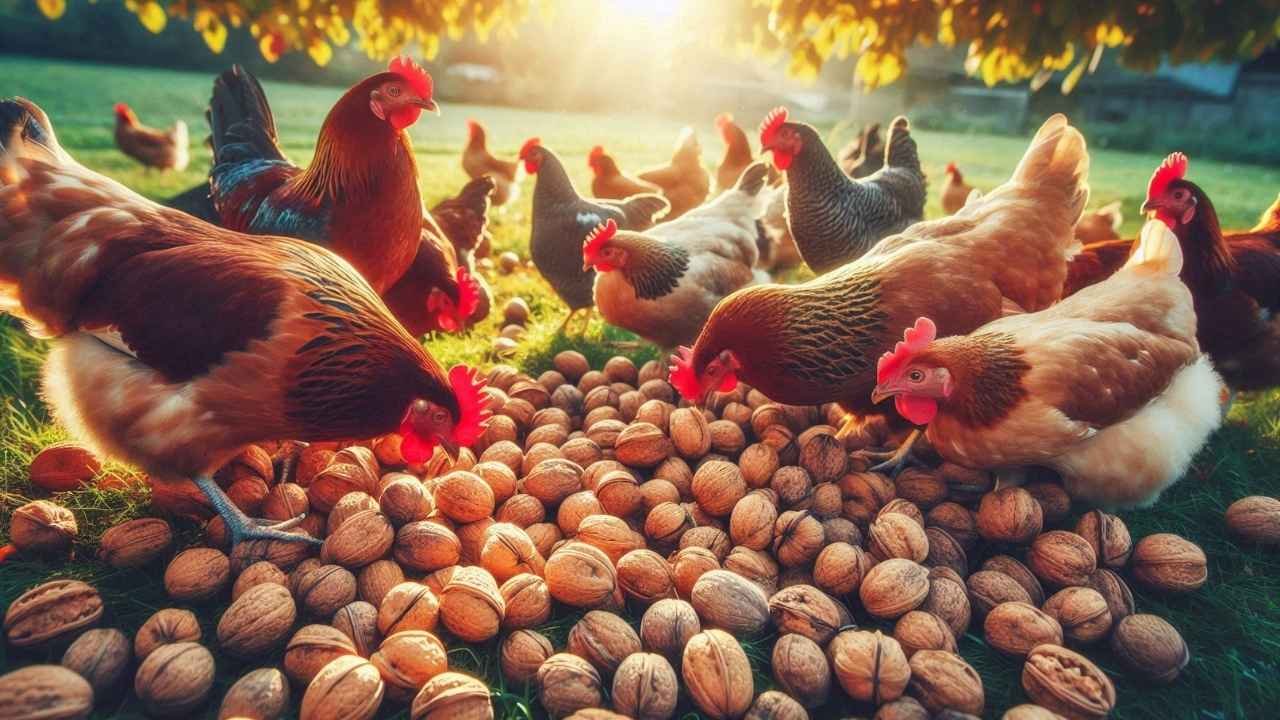
If you raise chickens, you already know how curious they are. They peck at almost anything, from grass to kitchen scraps. That curiosity often makes us wonder, can chickens have walnuts safely? I remember the first time I dropped a few crushed walnuts into my coop. The flock rushed in like it was a feast day. It felt rewarding, but I also paused and asked myself if I was doing the right thing.
The good news is that can chickens have walnuts is not a tricky question. The short answer is yes. Chickens can eat walnuts, but they must be given with care. Walnuts are rich in nutrients, yet they also contain high fat. That means they should stay a treat, not a daily meal. In this guide, I will walk you through everything in a simple way, just like we would chat over tea in the backyard.
Contents
- 1 Can Chickens Have Walnuts? The Straight Answer
- 2 Nutritional Value: Is Walnut Good for Chicken Health?
- 3 Why Moderation Matters More Than You Think
- 4 How to Prepare Walnuts Safely for Chickens
- 5 Fresh vs Moldy Walnuts: A Critical Warning
- 6 Can Chickens Have Walnuts in the Winter?
- 7 Key Tips for Feeding Walnuts to Chickens
- 8 Can Chickens Eat Walnut Shells? What You Need to Know
- 9 Black Walnuts and Chickens: Are They Safe Too?
- 10 Can Chickens Eat Hazelnuts and Other Nuts?
- 11 Signs You Are Feeding Too Many Walnuts
- 12 Best Ways to Serve Walnuts to Your Flock
- 13 Common Mistakes to Avoid When Feeding Walnuts
- 14 FAQs About Feeding Walnuts to Chickens
- 14.1 1. Can chickens have walnuts every day?
- 14.2 2. Are walnuts okay for chickens of all ages?
- 14.3 3. Can chickens eat walnut shells at all?
- 14.4 4. Is walnut good for chicken egg production?
- 14.5 5. Can chickens have walnuts in the winter more often?
- 14.6 6. Can chickens eat hazelnuts instead of walnuts?
- 15 Final Thoughts: Can Chickens Have Walnuts?
Can Chickens Have Walnuts? The Straight Answer
Let’s get right to it. Can chickens have walnuts? Yes, they can. Walnuts are safe when you feed them properly. They offer protein, healthy fats, and energy, which your flock can use, especially in colder months. When I first added walnuts to my flock’s diet, I noticed they became more active on chilly mornings.
However, walnuts are not a staple feed. Chickens need a balanced diet from quality feed. Treats like walnuts should only make up a small part of what they eat. Think of walnuts like dessert for your birds. You would not eat dessert all day, and your chickens should not either.
So, if you’re asking, are walnuts okay for chickens, the answer is yes, but always in moderation. Balance is the key to keeping your flock healthy and happy.
Nutritional Value: Is Walnut Good for Chicken Health?
Now let’s look deeper into why people ask, is walnut good for chicken health. Walnuts are packed with nutrients that can support your flock. They contain omega-3 fatty acids, which are good for overall health. These fats can help improve feather quality and energy levels.
Walnuts also contain protein, which is valuable in growth and egg production. The one time I realized that in winter when my chickens did not have many bugs to consume small treats made of walnuts kept them strong. It was like a gift to them to have a natural boost when they were in need of it.
Here is a quick look at what walnuts offer:
| Nutrient | Benefit for Chickens |
|---|---|
| Protein | Supports growth and egg production |
| Healthy fats | Provides energy, especially in cold weather |
| Vitamins | Helps overall body function |
| Minerals | Supports bone strength |
Even with these benefits, too much can cause problems. The high fat content can lead to weight gain. So while answering can chickens have walnuts, remember that moderation protects your flock from harm.
Why Moderation Matters More Than You Think
When your chickens are fond of a treat it is easy to get excited. but this is where most keepers fail. Excessive consumption of walnuts may result in digestive disorders and obesity. I had to appreciate this after being punished by giving too many treats in one winter. My hens lost a lot of activity and produced fewer eggs.
We cannot discuss whether or not chicken can have walnuts without discussing boundaries. Once or twice a week, a little piece is sufficient. The benefits do not require chicken to have a great deal.
Consider it thus, walnuts are fat as nearly as food is to us. And a little is good, but a lot is unpleasant. Something is like that with your chickens. The size of portions should be kept small so that the portions remain dynamic and healthy.
How to Prepare Walnuts Safely for Chickens
Preparation plays a big role in feeding walnuts safely. You cannot just toss whole nuts into the coop and walk away. When asking can chickens have walnuts, safety steps matter just as much as the answer.
First, always remove the shell if possible. Hard shells can be a choking hazard. If you want to keep your chickens entertained, you can offer unshelled walnuts occasionally. They will peck and try to break them, which keeps them busy.
Second, chop the walnuts into small pieces. Chickens do not chew like we do. Smaller pieces make it easier for them to swallow and digest. I usually crush walnuts lightly with a spoon before feeding.
Lastly, always check for freshness. Old or moldy walnuts can be harmful. Freshness is key to keeping your flock safe. So when thinking about are walnuts okay for chickens, remember that preparation makes all the difference.
Fresh vs Moldy Walnuts: A Critical Warning
This is one of the most important parts of the discussion. While can chickens have walnuts is a yes, moldy walnuts are a strict no. Mold can carry toxins that are dangerous for chickens. Even a small amount can make them sick.
One time I discovered some old walnuts in the store and was about to give them to my flock. Fortunately I smelled a faint odour and halted. That experience helped me to understand that one should be careful with food. Chickens are dependent on us to make safe decisions on their behalf.
Walnuts should be kept in a dry and cool place. In case they are bitter to smell or appear odd, dispose of them. You would rather waste a few nuts than put your flock to the risk. Good nutrition is always with fresh food.
Can Chickens Have Walnuts in the Winter?
Winter is when walnuts truly shine. Many people ask, can chickens have walnuts in the winter, and the answer is a strong yes. During cold months, chickens burn more energy to stay warm. Walnuts provide dense energy that helps them cope with the cold.
It is also different in my own coop where we feed during winter. The number of insects and greens is reduced. One or two portions of little pieces of walnut added to my flock once or twice a week gave them a pep-up. I observed that they were more active even during cold mornings.
Nevertheless, it does not mean that moderation is less important even in winter. Even excessive consumption of walnuts will make one gain weight. You want to nourish, not feed up your flock. Therefore, asking can chicken can have walnuts in the winter season but consider it as a seasonal food and not a habit.
Key Tips for Feeding Walnuts to Chickens
To make things simple, here are some easy tips you can follow:
- Always feed walnuts in small amounts
- Chop or crush walnuts before serving
- Avoid moldy or old nuts
- Use walnuts as a treat, not a main feed
- Offer more during cold weather, but still limit portions
These small habits can make a big difference. When you follow them, the answer to can chickens have walnuts becomes not just safe, but beneficial.
Can Chickens Eat Walnut Shells? What You Need to Know
This is where many chicken keepers get confused. After learning that can chickens have walnuts is safe, the next question often is: can chickens eat walnut shells? The answer is mostly no. Walnut shells are very hard and can be difficult for chickens to break down. They may try to peck at them, but swallowing large pieces can lead to choking or digestive issues.
With that said, however, there is a minor exception. In the event that the shells have already been cracked and broken into small pieces, then it is possible that the chickens can safely peck around them. They also like burrowing in shells in order to detect small insects hidden within the shells in other instances. I have observed my flock do exactly this, as a treasure hunting, on a smaller scale. Never do I, however, use shells as food.
You had better take the shells off to be on the safe side. Pay attention to the edible soft nut inside. When inquiring whether chicken can have walnuts, it is important to keep in mind that it is the nut that is a treat, and not a shell. It is always safe to keep things simple.
Black Walnuts and Chickens: Are They Safe Too?
Another common concern is about black walnuts. You might wonder if they are different. So, are walnuts okay for chickens when they are black walnuts? Yes, chickens can eat black walnuts too. In fact, many backyard flocks naturally forage around black walnut trees.
Black walnuts have a stronger taste and thicker shell. Chickens usually enjoy pecking through the outer hull to find bugs rather than eating large amounts of the nut itself. I’ve noticed that my chickens treat black walnuts more like a foraging activity than a meal.
However, the same rules apply. Always ensure freshness and offer only small amounts. The strong flavor may also mean chickens eat less of it, which can actually help with moderation. So when considering can chickens have walnuts, black walnuts can be included, but still treated as an occasional snack.
Can Chickens Eat Hazelnuts and Other Nuts?
Once you start feeding walnuts, it is natural to ask about other nuts. For example, can chickens eat hazelnuts?
Yes, even the hazelnuts can be safe to the chicken in case it is prepared. They must be sliced into little pieces like walnuts, and in limited amounts.
Chickens may be fed on different kinds of nuts such as almonds and peanuts (unsalted and plain). These snacks have the same advantages such as protein and healthy fat. I constantly change the treats so as to make the flock interested. It is as though to give them a little surprise now and then.
Here is a quick comparison:
| Nut Type | Safe for Chickens | Notes |
|---|---|---|
| Walnuts | Yes | High fat, feed in moderation |
| Hazelnuts | Yes | Chop into small pieces |
| Peanuts | Yes | Must be plain and unsalted |
| Almonds | Yes (small amounts) | Avoid bitter almonds |
Even with variety, the rule stays the same. Treats should not replace balanced feed. So while exploring options beyond can chickens have walnuts, always keep your chickens’ main diet in mind.
Signs You Are Feeding Too Many Walnuts
It is easy to overdo treats, especially when your chickens seem to love them. But too many walnuts can cause problems. Knowing the signs early can help you adjust quickly.
Watch for these signs:
- Chickens becoming overweight or less active
- Drop in egg production
- Loose or unusual droppings
- Lack of interest in regular feed
I once noticed my hens ignoring their regular feed after too many treats. That was a clear sign I needed to cut back. Chickens should always prioritize their main diet over snacks.
So, when thinking about can chickens have walnuts, remember that the goal is balance. A healthy flock is an active flock, and moderation helps maintain that energy.
Best Ways to Serve Walnuts to Your Flock
Serving walnuts can be fun if you get a little creative. Chickens enjoy variety and interaction. Instead of just tossing walnuts on the ground, try mixing them into other treats.
You can:
- Mix crushed walnuts with grains
- Scatter small pieces in the coop for foraging
- Combine with fruits like apples or berries
- Hide pieces in straw to encourage natural pecking
I love scattering treats in the bedding. It keeps my chickens busy and active. It also mimics their natural behavior, which is always a good thing.
When you make feeding interactive, you turn a simple treat into enrichment. So while answering can chickens have walnuts, think beyond nutrition and consider their happiness too.
Common Mistakes to Avoid When Feeding Walnuts
Even experienced chicken keepers can make small mistakes. Avoiding these can keep your flock safe and thriving.
Some common mistakes include:
- Feeding too many walnuts too often
- Giving whole nuts without breaking them
- Ignoring signs of mold or spoilage
- Replacing regular feed with treats
I’ve made a few of these mistakes myself, especially in the early days. But chickens are forgiving, and learning from experience is part of the journey.
Always remember, treats should support your chickens, not harm them. Keeping this in mind makes the question can chickens have walnuts easy to manage in daily care.
FAQs About Feeding Walnuts to Chickens
1. Can chickens have walnuts every day?
No, it is not recommended. Even though can chickens have walnuts is safe, daily feeding can lead to weight gain. Offer them once or twice a week.
2. Are walnuts okay for chickens of all ages?
Adult chickens can enjoy walnuts safely. For chicks, it is better to avoid nuts or give extremely small, finely crushed pieces.
3. Can chickens eat walnut shells at all?
It is best to avoid shells. While chickens may peck at them, they are not easy to digest and can cause problems.
4. Is walnut good for chicken egg production?
Walnuts provide nutrients that support overall health, but they should not replace a balanced layer feed. Think of them as a supplement, not a solution.
5. Can chickens have walnuts in the winter more often?
Yes, slightly more often than in summer. The extra fat helps with energy, but moderation is still important.
6. Can chickens eat hazelnuts instead of walnuts?
Yes, hazelnuts are a good alternative. Just like walnuts, they should be chopped and fed in small amounts.
Final Thoughts: Can Chickens Have Walnuts?
So, let’s wrap it up in a simple way. Can chickens have walnuts? Yes, they can, and they will likely love them. Walnuts offer energy, protein, and healthy fats, making them a great occasional treat.
However, as is true with most good things, there is a limit. Excessive feeding may cause health problems whereas sufficient one may nourish your flock, particularly during the winter. Personally, I found that a small group of people who shared at least once in a while is a pleasure to the coop without hurting anyone.
Considering walnuts, think of them as a luxury, but not as a necessity. It is on you to make balanced decisions concerning your chickens. By doing so, you are providing a healthy, happy environment that they will be able to flourish in.
Feeding chickens is not only about nutrition at the end of the day. It is all about care, attention and little things of connection. And even then, that bond is brought about by something as minimal as the exchange of a few smashed walnuts.
See Also:
Can Chickens Have Pumpkin Seeds?

Joel Callahan is a father of two daughters in Alaska. He runs a family poultry farm and works part-time as a food department adviser. He shares simple farming tips and advice.