
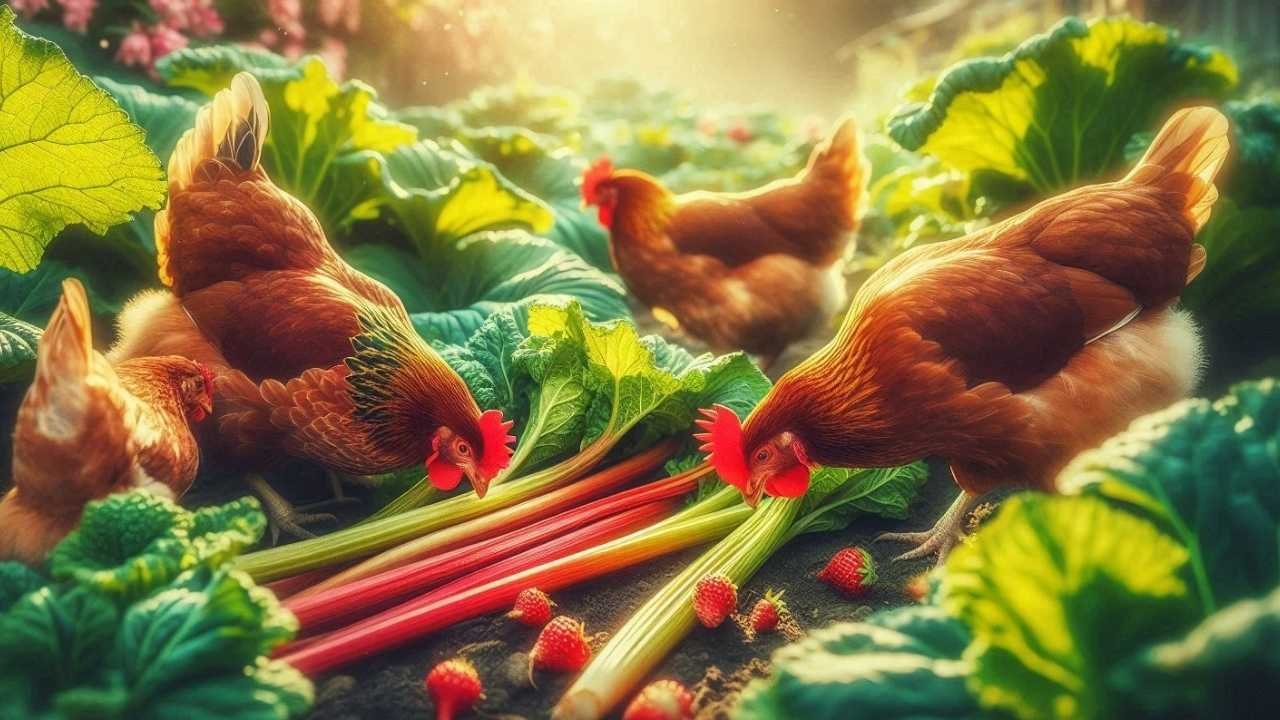
If you raise chickens, you’ve likely asked yourself, “can chickens eat rhubarb?” It seems like a harmless plant. After all, humans enjoy it in pies and jams. But here’s the truth many beginners miss: not everything safe for us is safe for chickens.
I remember when I first started raising chickens. I thought my birds could eat almost any garden scrap. One day, I almost tossed rhubarb leaves into their run. Thankfully, I paused and checked. That small moment may have saved my flock.
In this guide, we’ll break down everything you need to know about can chickens eat rhubarb, including risks, symptoms, and safe alternatives. By the end, you’ll feel confident about what to feed and what to avoid.
Contents
- 1 What Is Rhubarb and Why Do People Grow It?
- 2 Can Chickens Eat Rhubarb? The Clear Answer
- 3 Why Is Rhubarb Toxic to Chickens?
- 4 What Happens If Chickens Eat Rhubarb?
- 5 Can Chickens Eat Rhubarb Leaves?
- 6 Can Chickens Eat Rhubarb Stalks Raw?
- 7 Can Chickens Eat Cooked Rhubarb?
- 8 Can Chickens Eat Rhubarb Seeds?
- 9 Symptoms of Rhubarb Poisoning in Chickens
- 10 Safe vs Unsafe Plant Foods for Chickens
- 11 Common Toxic Plants Chickens Should Avoid
- 12 Better Alternatives: What Chickens Can Safely Eat
- 13 How to Protect Your Chickens from Rhubarb Exposure
- 14 What to Do If Your Chickens Eat Rhubarb
- 15 Why Chickens Still Try to Eat Toxic Plants
- 16 The Long-Term Effects of Feeding Unsafe Foods
- 17 Building a Safe and Healthy Chicken Diet
- 18 Simple Feeding Guide for Beginners
- 19 FAQs About Can Chickens Eat Rhubarb
- 19.1 1. Can chickens eat rhubarb at all?
- 19.2 2. Is rhubarb safe for chickens to eat in small amounts?
- 19.3 3. Can chickens eat rhubarb leaves?
- 19.4 4. Can chickens eat rhubarb stalks raw?
- 19.5 5. Can chickens eat cooked rhubarb?
- 19.6 6. What should I do if my chicken eats rhubarb?
- 19.7 7. Are there safe alternatives to rhubarb for chickens?
- 20 Final Thoughts: Can chickens eat rhubarb?
What Is Rhubarb and Why Do People Grow It?
Rhubarb is a unique plant. It resembles a vegetable, however, it is used by many as a fruit. It is of buckwheat family growing well in the colder climates.
The plant is thick stalked with big green leaves. The stalks are of a red or pink color. They are cooked by people as sweet dishes. It reminds the texture of celery but it is sharp and tart.
Rhubarb is a favorite among many backyard gardeners given the fact that it sprouts back each year. It is tough and simple to hold. Because it does well in your garden, however, does not imply that it belongs in your chicken coop.
This is where the main question comes back: can chickens eat rhubarb safely? The answer is more serious than most expect.
Can Chickens Eat Rhubarb? The Clear Answer
Let’s keep it simple and direct: No, chickens should not eat rhubarb.
Every part of the plant can be harmful. This includes the leaves, stalks, and even the roots. The danger comes from a compound called oxalic acid.
Oxalic acid is toxic in large amounts. In chickens, it can damage organs and cause severe health issues. Even small exposure can lead to discomfort.
So when someone asks, can chickens eat rhubarb, the safest answer is always no. It’s not worth the risk, even as a small treat.
Think of rhubarb like a hidden trap in your garden. It looks harmless but carries real danger for your flock.
Why Is Rhubarb Toxic to Chickens?
In order to know the risk we must see what is inside rhubarb. The plant has oxalic acid, a natural chemical that may cause interference with the absorption of calcium.
Calcium is of high reliance among chicken. It assists them in laying good eggs and healthy bones. As soon as the oxalic acid gets in their system, it connects with calcium and interferes with its utilization.
This in the long run can make your birds weak. It may also influence their quality of eggshell. In a worst scenario, it can affect the kidneys.
This is why experts warn strongly against feeding rhubarb. When thinking about can chickens eat rhubarb, remember that even a small mistake can impact their health.
What Happens If Chickens Eat Rhubarb?
Accidents happen. Chickens are curious by nature. If they find rhubarb, they might peck at it.
So what happens next?
In mild cases, chickens may show signs of digestive upset. This can include loose droppings or reduced appetite. You might notice they seem less active than usual.
In more serious cases, symptoms can escalate. These may include:
- Diarrhea
- Vomiting-like behavior
- Difficulty breathing
- Weakness or lethargy
If left untreated, the condition can worsen. Prolonged exposure to oxalic acid may lead to kidney damage or even death.
So again, when asking can chickens eat rhubarb, the real concern is not just “can they,” but “what happens if they do?”
Can Chickens Eat Rhubarb Leaves?
This is among the crucial questions. The answer is a firm no.
The leaves of rhubarb are the most poisonous part of it. They are the most poisonous in oxalic acid. Even a little of it can do great damage.
And this is where danger comes in case your chickens are free to roam. They might find leaves of rhubarb in your garden and chew them because they are curious.
In case you have the rhubarb growing, you would better keep chickens at a distance. Fence or use barriers where necessary.
So, if you’re wondering can chickens eat rhubarb leaves, the safest response is never allow it under any circumstances.
Can Chickens Eat Rhubarb Stalks Raw?
Most individuals believe that the stalks could be safe. Human beings eat them, right?
Raw rhubarb stalks are not safe in the case of chickens though. Although they might have less oxalic acid than the leaves, this is not safe enough to feed.
The digestive system of chicken is different. What is effective with human beings is not necessarily effective with them.
Even little ones accumulate with time. This may cause health complications in the long run.
So when you ask, can chickens eat rhubarb stalks raw, it’s better to stay cautious and avoid them completely.
Can Chickens Eat Cooked Rhubarb?
Cooking changes many foods. It can make them softer and easier to digest. But it does not remove all toxins.
In the case of rhubarb, cooking does not make it safe for chickens. The harmful compounds can still remain.
This is a common mistake among beginners. They think cooking neutralizes the danger. Unfortunately, that is not true here.
So if you’re thinking about kitchen scraps and wondering can chickens eat cooked rhubarb, the answer is still no.
Can Chickens Eat Rhubarb Seeds?
This question comes up less often, but it’s still important. Rhubarb seeds are not commonly fed to chickens, and they are not considered safe.
Seeds can carry trace toxins or cause digestive issues. Chickens don’t need them, and there are far better options available.
It’s always better to stick with known safe foods. When unsure, avoid the risk.
So again, for clarity: can chickens eat rhubarb seeds? It’s best not to include them in your flock’s diet.
Symptoms of Rhubarb Poisoning in Chickens
Recognizing symptoms early can make a big difference. If your chickens have eaten rhubarb, watch them closely.
Here are some key signs to look for:
- Loose or watery droppings
- Low energy or weakness
- Breathing problems
- Loss of appetite
- Unusual behavior
In severe cases, chickens may struggle to move. Muscle weakness or paralysis can occur.
These symptoms are your warning signs. If you notice them, act quickly. Remove any access to rhubarb and provide clean water.
Understanding these signs helps answer the deeper question behind can chickens eat rhubarb—not just whether they can, but how to protect them if they do.
Safe vs Unsafe Plant Foods for Chickens
| Category | Safe Options | Unsafe Options |
|---|---|---|
| Leafy Greens | Lettuce, cabbage | Rhubarb leaves |
| Garden Plants | Wheatgrass | Rhubarb plant |
| Vegetables | Carrots, cucumbers | Toxic ornamental plants |
| Treats | Fruits in moderation | Unknown wild plants |
This table makes it easier to decide what belongs in your chicken’s diet. When in doubt, always choose safe, proven foods.
Common Toxic Plants Chickens Should Avoid
Rhubarb is not the only danger. Many plants can harm chickens.
Some common ones include:
- Azalea
- Daffodil
- Lily of the valley
- Castor bean plant
- Chrysanthemum
These plants may look beautiful, but they can be harmful if eaten.
It’s a good habit to check your yard. Remove or block access to toxic plants.
When thinking about can chickens eat rhubarb, it’s part of a bigger picture: keeping your flock safe from all harmful plants.
Better Alternatives: What Chickens Can Safely Eat
The good news is that chickens love many safe foods. You don’t need risky options like rhubarb.
Great choices include:
- Wheatgrass for vitamins and energy
- Lettuce for hydration and fiber
- Cabbage for immune support
These foods are not just safe—they’re healthy. They support egg production and overall well-being.
Feeding your chickens should feel simple and safe. When you avoid risky foods, you create a better life for your flock.
How to Protect Your Chickens from Rhubarb Exposure
Now that we’ve answered can chickens eat rhubarb, the next step is protection. Prevention is always easier than treatment. Chickens are natural foragers. They peck at anything that looks interesting, especially green plants.
When you plant rhubar in your garden, make sure that it is away out of chicken space. It is a big difference between a plain fence. Pecking by curious pecks may be brought to a halt by the slightest hindrance. I have been able to watch the chickens peeking through narrow holes just to have a flavor of something new.
The other strategic action is to monitor free-ranging time. It is wonderful when the chicken is free to roam, but it must be a safe area. Go around your yard and eliminate dangerous vegetation. Consider your garden as a playground. All things must be safe to your flock.
So while the question is can chickens eat rhubarb, the real goal is making sure they never get the chance.
What to Do If Your Chickens Eat Rhubarb
Mistakes happen. Perhaps a leaf flew into the coop, or a chicken had got into the garden. When you feel like you have ingested rhubarb, then do not panic but then move fast.
First, clear the area of any left rhubarb. Then bring lots of fresh and clean water. Water aids in elimination of toxins in the body. It is also possible to give safe and soft food to facilitate digestion.
Continuously observe your chickens within the next 24-48 hours. Check behavioral change, droppings or breathing. The symptoms are harder to treat when in their advanced form.
If symptoms worsen, contacting a vet is the safest option. Chickens are tough, but toxins like oxalic acid can escalate fast. This is why understanding can chickens eat rhubarb is so important—it prepares you for both prevention and response.
Why Chickens Still Try to Eat Toxic Plants
You may ask, then, why are chickens eating rhubarb, since it is a bad thing? The solution is easy, chickens do not necessarily know what is safe.
Chickens investigate the world by pecking. It is the way they learn and get food. They could be attracted by bright leaves or thick stalks. The texture of rhubarb is like that of celery, and it is even more tempting.
When I was young in keeping chickens, I saw my flock pecking something that I had never imagined. Everything, shiny objects or strange plants, was a target. Not a bit of curiosity is absent in that, which is an element of their charm–but it is part of their danger, too.
This is why relying on instinct is not enough. You must guide their environment. When asking can chickens eat rhubarb, remember that chickens won’t ask first—they’ll peck first.
The Long-Term Effects of Feeding Unsafe Foods
Unsafe foods do not necessarily cause immediate damage by feeding on them. The damage may accumulate gradually at times. This is so more with toxins such as oxalic acid.
With time, continuous exposure may make your chickens weak. It can have an influence on their kidneys, bones, and production of eggs. You may find skinnier eggshells or a lower laying.
Chickens are good at covering up disease. With the onset of the symptoms, the issue can be severe. This is why it is better to prevent than to cure.
When people casually ask can chickens eat rhubarb, they often think about short-term effects. But the real danger lies in the long-term impact on your flock’s health.
Building a Safe and Healthy Chicken Diet
A nutritious diet of chicken is not complicated. It does not require dangerous plants or intricate ingredients. The feed should be of good quality that is meant to be used by the chicken.
Safety treats can be added there. Fresh vegetables, grains and greens are excellent. Diversity makes chicken cheerful and energetic.
Consider their food as a balanced meal. We should not consume junk food, and in the same way, chickens should not be subjected to poisonous vegetation. Any treat must help them not put their health at risk.
So instead of asking can chickens eat rhubarb, shift your mindset. Ask, “What foods help my chickens thrive?” That small change makes a big difference.
Simple Feeding Guide for Beginners
Here’s a quick guide to help you choose the right foods:
Daily Feed (Main Diet):
- Commercial chicken feed
- Clean water
Healthy Treats (In Moderation):
- Leafy greens like lettuce
- Vegetables like cabbage
- Grains and seeds
Foods to Avoid:
- Rhubarb (all parts)
- Toxic garden plants
- Moldy or spoiled food
This simple system keeps things easy. You don’t need to overthink feeding. Just stay consistent and safe.
FAQs About Can Chickens Eat Rhubarb
1. Can chickens eat rhubarb at all?
No, chickens should not eat rhubarb. All parts of the plant contain harmful compounds that can affect their health.
2. Is rhubarb safe for chickens to eat in small amounts?
Even small amounts are risky. It’s best to avoid it completely rather than take chances.
3. Can chickens eat rhubarb leaves?
No, rhubarb leaves are the most toxic part. They contain high levels of oxalic acid and should never be fed.
4. Can chickens eat rhubarb stalks raw?
Raw stalks are not safe either. While less toxic than leaves, they still pose a risk.
5. Can chickens eat cooked rhubarb?
Cooking does not remove the harmful compounds. Cooked rhubarb is still unsafe for chickens.
6. What should I do if my chicken eats rhubarb?
Remove access immediately, provide clean water, and monitor your chicken. Seek veterinary help if symptoms appear.
7. Are there safe alternatives to rhubarb for chickens?
Yes, foods like lettuce, cabbage, and wheatgrass are safe and healthy options.
Final Thoughts: Can chickens eat rhubarb?
So, let’s bring it all together. Can chickens eat rhubarb? The answer is clear—no, they should not.
It is one of those plants which seem to be innocent yet have some actual dangers. The risks are not worth the reward even in cases of digestive problems and severe organ injury. Your chickens are relying on you to take safe decisions on their behalf.
I always tell the beginners who keep chickens; in any case, I say leave it out. You have no end of safe food that your flock will adore. You do not have to risk some dangerous ones.
Rearing chickens ought to be a happy experience and not a tense one. Once you have the knowledge of what is safe and what is not, then it is easy. And your chickens? They remain joyful, healthy and alive.
See Also:
Can Chickens Have Pumpkin Seeds?

Joel Callahan is a father of two daughters in Alaska. He runs a family poultry farm and works part-time as a food department adviser. He shares simple farming tips and advice.